
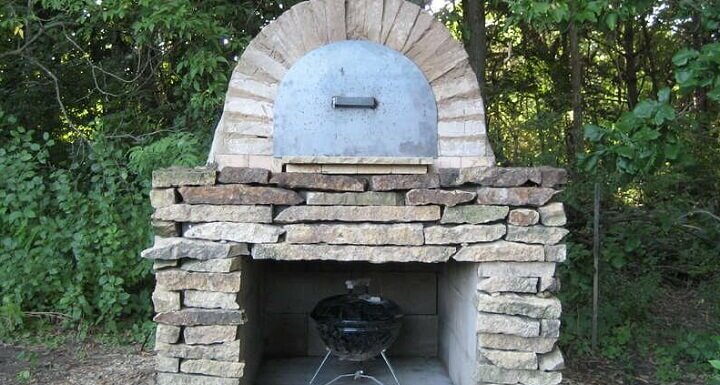
We’ve recently put out quite a few articles on ways that you can build an oven to cook food with the most ancient of methods: fire.
So far, we’ve got articles on Outdoor Brick Ovens, (largely indoor) Masonry Ovens, and Outdoor Earthen Ovens. But of all the materials that you can build with, nothing speaks of durability and longevity like stone.
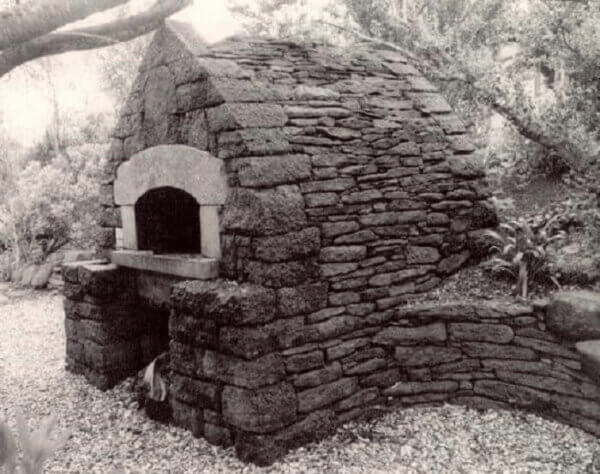
Before there was concrete, brick, or steel, there was stone. We may marvel at the grandeur of the Golden Gate Bridge or the Eiffel Tower, for example, but somewhere in the background the Pont Du Gard is still standing, a few millennia older than either of those structures.
Stone speaks of permanence, stability, and timelessness. If that’s the aesthetic you’re going for on your property, then stone is and has always an excellent option. And when it comes to outdoor ovens, especially if you want some local materials included in your build, stone is the natural choice in every sense of the word!
What is an Outdoor Stone Oven?
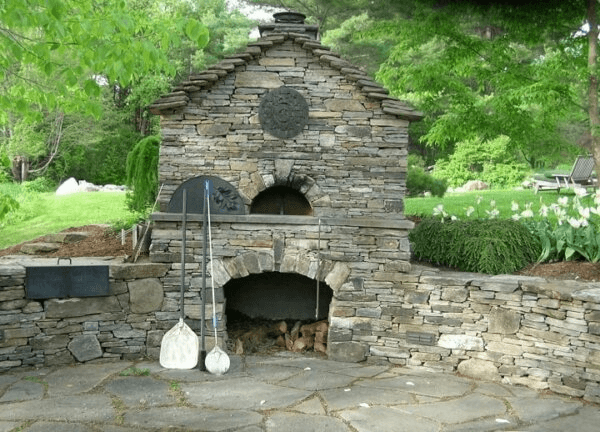
An outdoor stone oven is a cooking device made of stone that is specifically designed to function outside of the enclosures of a house. They are all massive structures that are built in place because once they are built, you aren’t going to be able to move it – they can weigh thousands of pounds when fully constructed.
These stone ovens are all meant to be used with wood as the fuel, and many can be operated using wood that is not well suited for the home wood stove. They are as beautiful as they are enduring, so if you are looking for an oven that can still be used by your grandchildren long after you are gone, this is the oven for you.
How does an Outdoor Stone Oven Work?
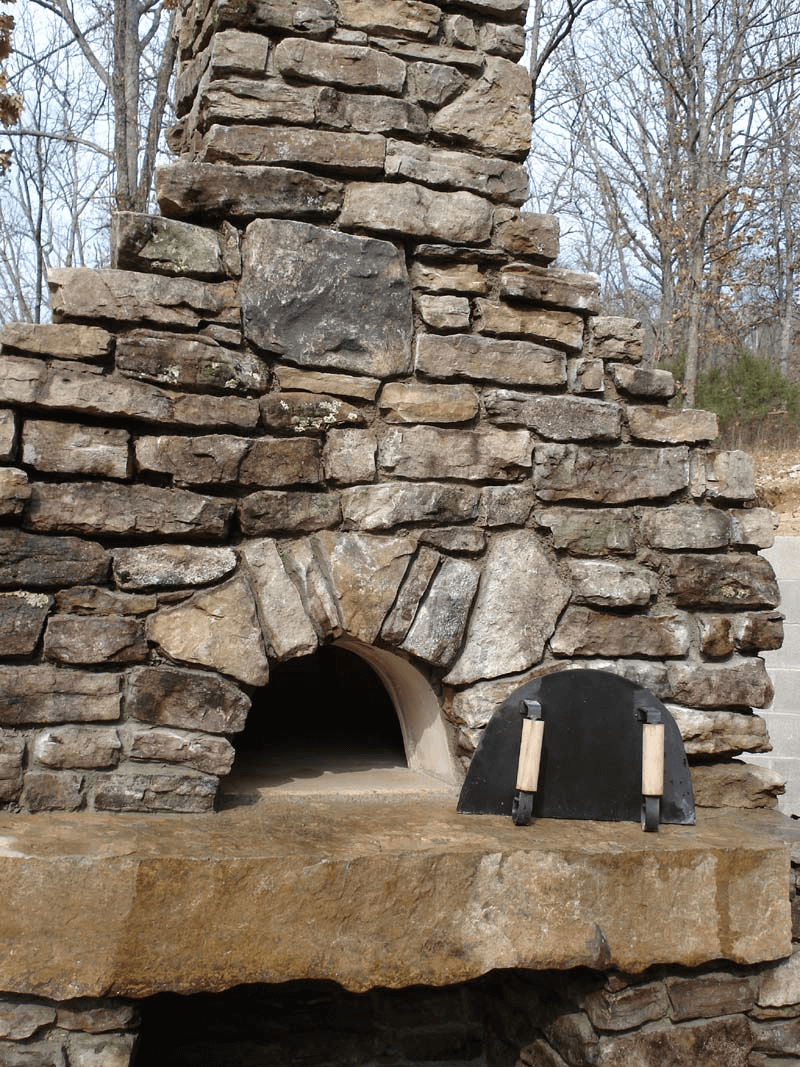
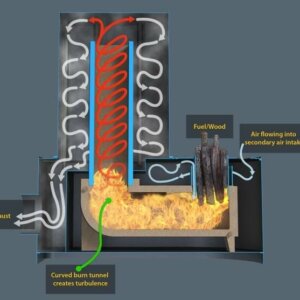
The fundamental concept behind a stone oven is fairly simple – you are constructing a box that holds a fire, and then you can use either that fire or the mass of the oven to cook food. Whichever method you choose, it all starts with building a fire in the firebox of the oven.
The fire is built directly on the cooking surface of the oven. It is usually easiest to build the fire in the front of the oven and then move it further back as the fire gets going. The fire will draw in fresh air through the main opening of the oven. From there, the hot gases rise and heat the mass of the oven before they leave the oven either back through the opening in the front of the oven or through a chimney built for this purpose. Draft is usually better in an oven with a chimney as the cold incoming air and the hot outgoing air don’t have to compete with each other for space.
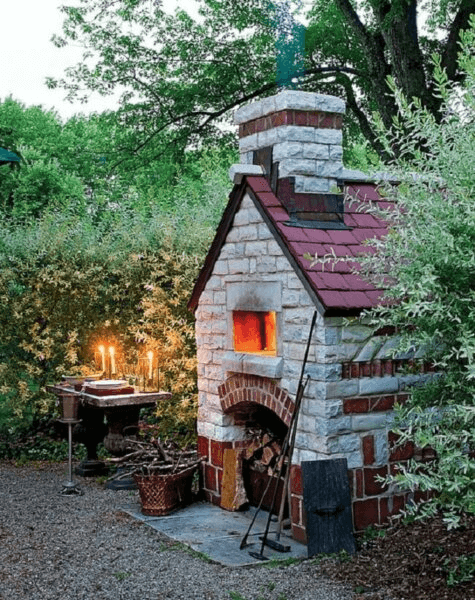
An important idea to understand in order to comprehend how these ovens function is called thermal mass.
Thermal mass is a measure of the amount of heat energy that a material is able to absorb from a heat source. This absorbed heat will then be radiated back out of the material over the course of many hours or even days. Stone ovens utilize their massive size to hold a great amount of heat from the fire that is built within their bellies. Once the oven has absorbed an adequate amount of energy, the fire is removed from the oven, the oven is cleaned, and then the item to be baked is placed in the oven which is sealed with a door. All of the absorbed energy is then released from the walls of the oven into the food which cooks it.
What Kind Of Stone Works?
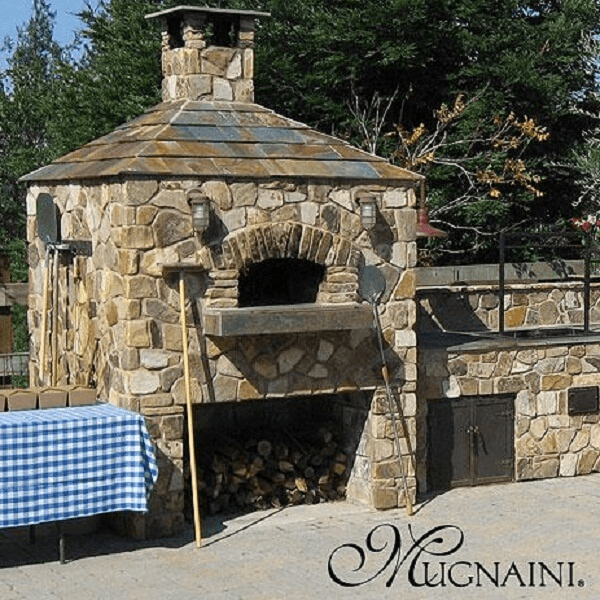
There are certainly some sorts of stone that are not suitable for the construction of a stone oven. As a stone oven is built for thermal mass, you do not want to use any stone that has a lot of air spaces within as this lowers mass and actually serves as an insulator.
Because of this, stone like pumice would be unsuitable. However, one caveat to this is that such insulative stone can be used underneath the stone used for the main cooking surface as it would prevent the heat absorbed from the fire escaping down into the bottom of the oven where it would not be as useful.
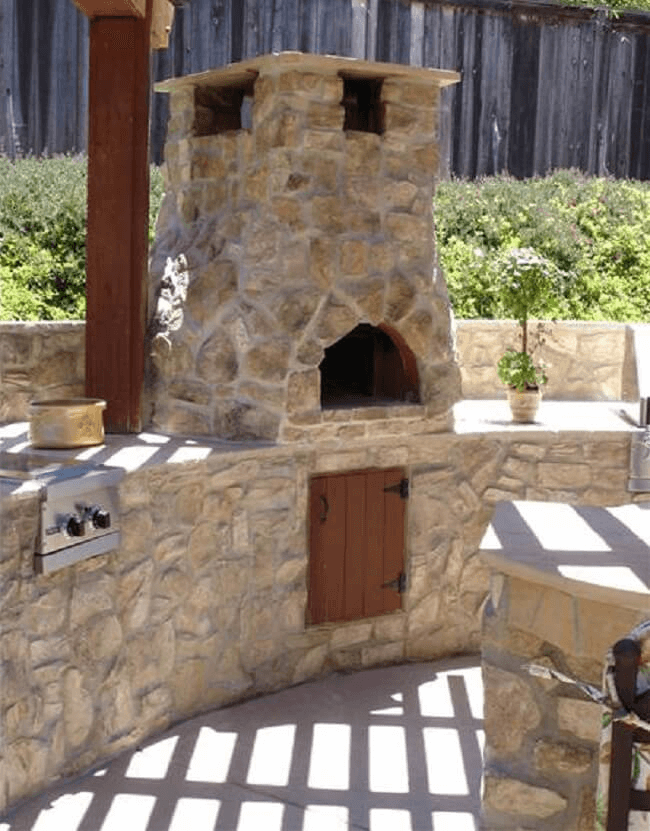
I would also advise against using any sort of grainy-textured stone in the part of the oven that comes into contact with food. If you use a loose-grained sandstone, for instance, you will almost certainly end up with sand in your food.
As those who have experienced such a thing, even biting into a single grain of sand is not a pleasant experience by any stretch of the imagination. Limestone would also fall into this category. These stones can be used as the base of the oven or as the outer portions of the oven as they will add thermal mass and some of them certainly look nice.
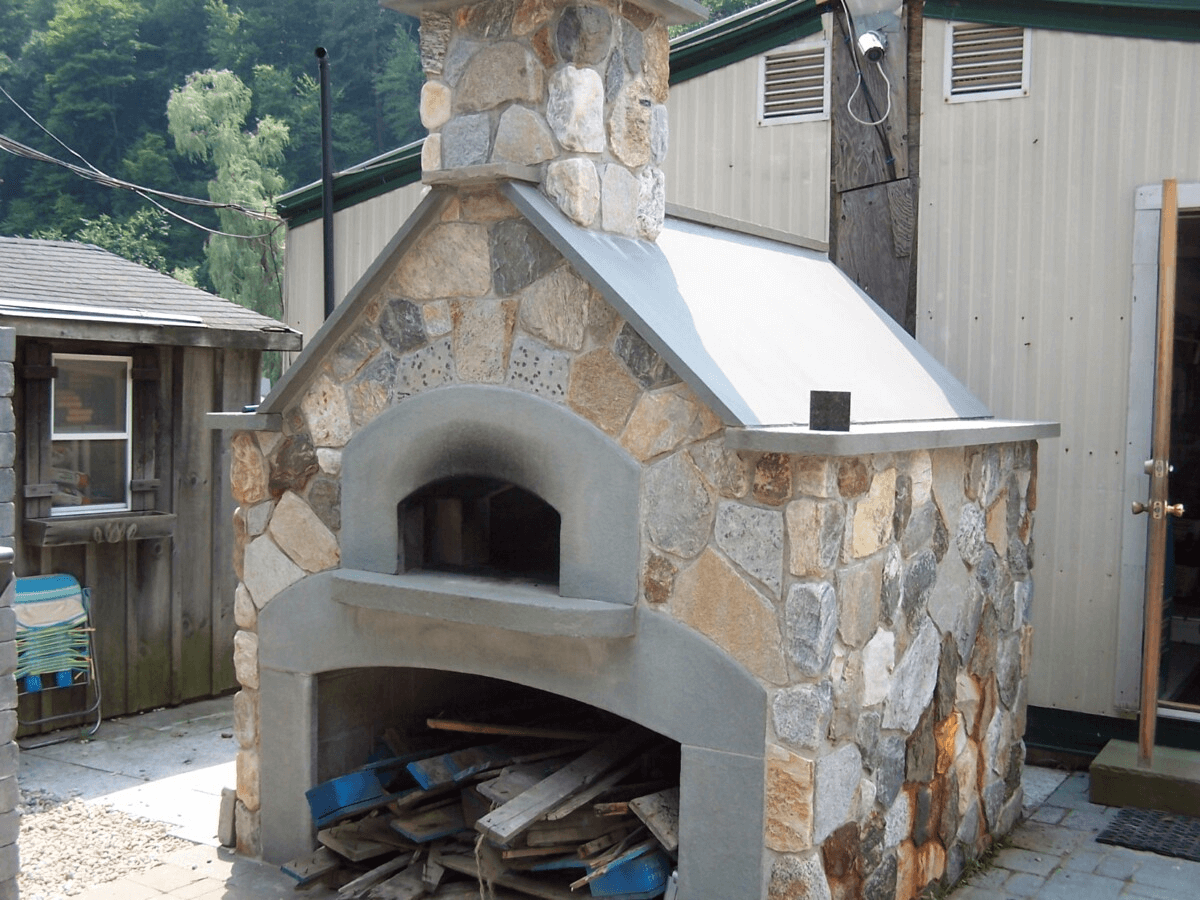
There is another reason you need to be somewhat careful in the selection of stone for the cooking surface of the oven and the stone directly around the firebox that comes in contact with the fire. You must remember that these stones will be exposed to extreme temperature changes. Under such conditions, some types of stone are more likely to explode than others.
Porous stones are able to absorb water; this water can be heated by the fire so rapidly that the water expands into steam and causes the rock to split, or in extreme situations, explode. So, for the stone exposed to the fire, you want to choose smooth and nonporous stone. Something like granite and marble both work. However, if you don’t mind utilizing a bit of brick in your oven, you can buy firebrick to line the firebox of you stone oven with. These are made specifically for this purpose and stand up extremely well to these temperatures.
A Few Notes on Building with Stone
If you have never built with stone before, here are a few things that you should take into consideration.
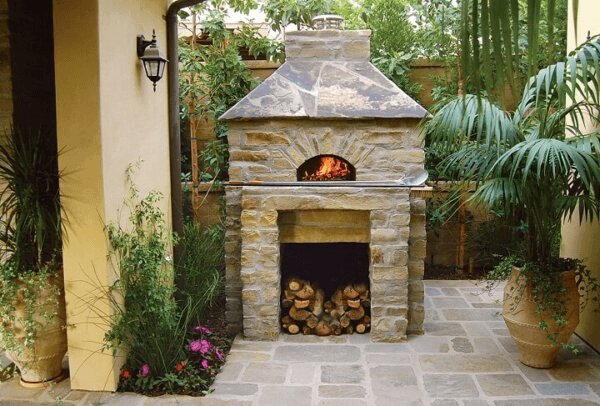
Stone is HEAVY. Even a stone of modest size can weigh a couple hundred pounds. Being heavy has both advantages and disadvantages. The main advantage is that heavy materials have a lot of thermal mass, and as I already mentioned, thermal mass allows it to absorb heat from the fire and then release it slowly. This is central to its use in an oven. However, there are some disadvantages to stone being so heavy.
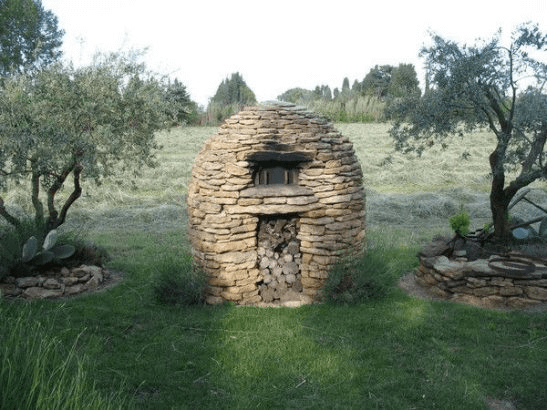
One disadvantage of being heavy is that it is difficult to move. If you are moving all of the stone used in the construction of the oven by yourself without machinery, it will be tiring work. It will also be work that could possibly hurt you. Be careful when working with stone and go slowly. Many stones are easier to move by flipping them rather than picking them up. Flip or roll them onto a sled that is low to the ground and then drag them to the building site rather than carrying them. Use ramps to help you get a large stone into place instead of trying to lift them up. Make sure to wear steel-toed shoes just in case you happen to drop or flip a stone onto your foot.
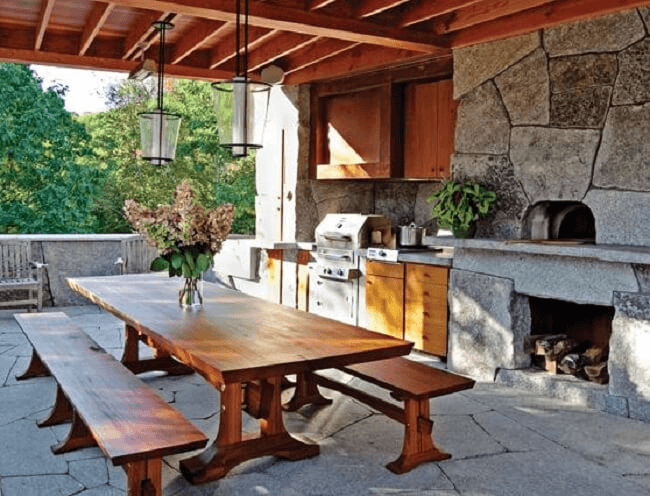
Another disadvantage is that it requires a significant foundation. If you try to build a stone oven directly on the ground, settling will almost certainly occur. Some parts of it will settle more than others which could cause it to topple over and ruin all of your hard work. Be sure to dig down to solid undisturbed ground. If you didn’t dig down to bedrock, pour a concrete footing reinforced with rebar. On this nice and level foundation, build your oven.
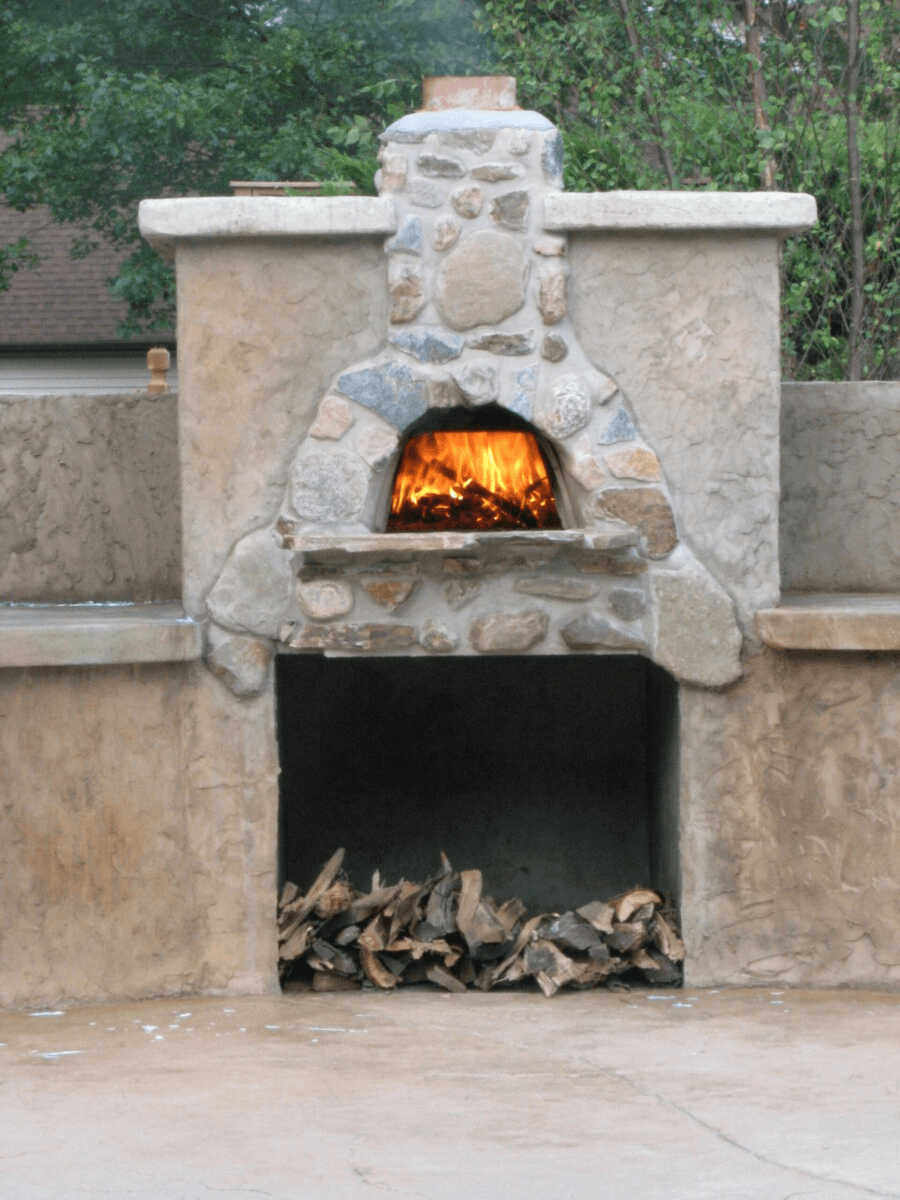
Finally, unless you are building with nice flat stones you will most likely be using mortar to hold this structure together. There are different types of mortar, and not all are suitable in all situations.
The four main types found in stores are M, N, O, and S. In most big box hardware stores, N and S are the most common. As your stone oven will be built above-grade, is outside, and will not be part of a supporting wall, type N is generally recommended. Or, if you want to go old school, you can use a lime mortar like people used for thousands of years – there are many websites that will give you the correct formula for making your own.
Examples of Stone Ovens
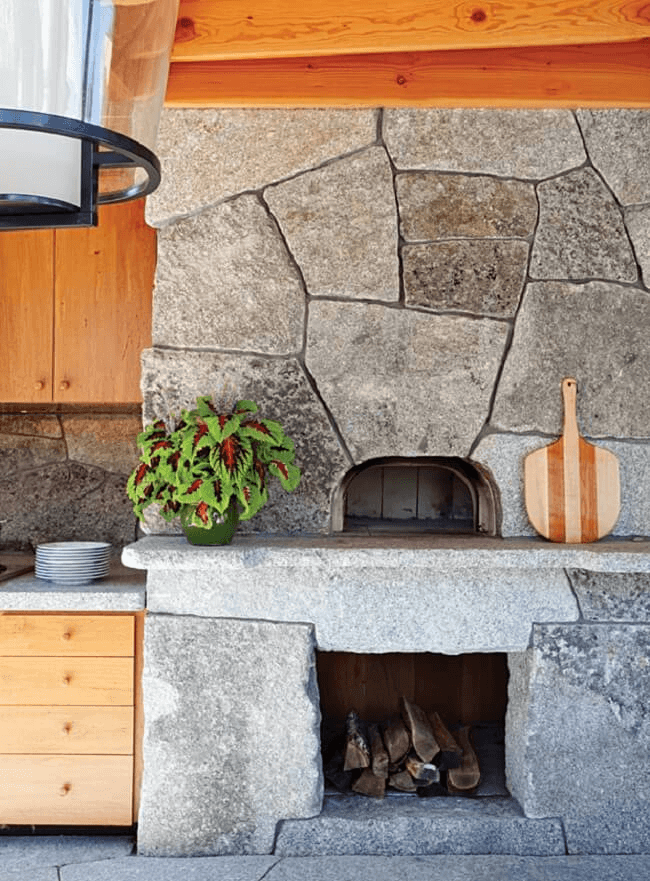
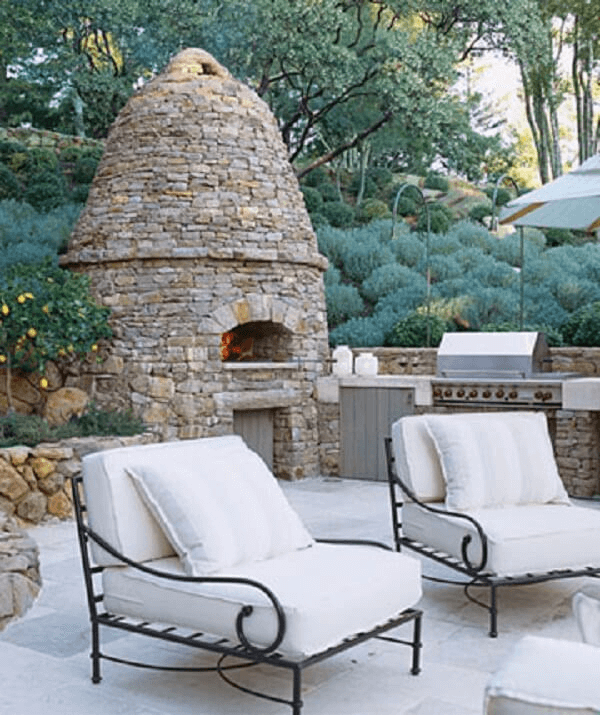
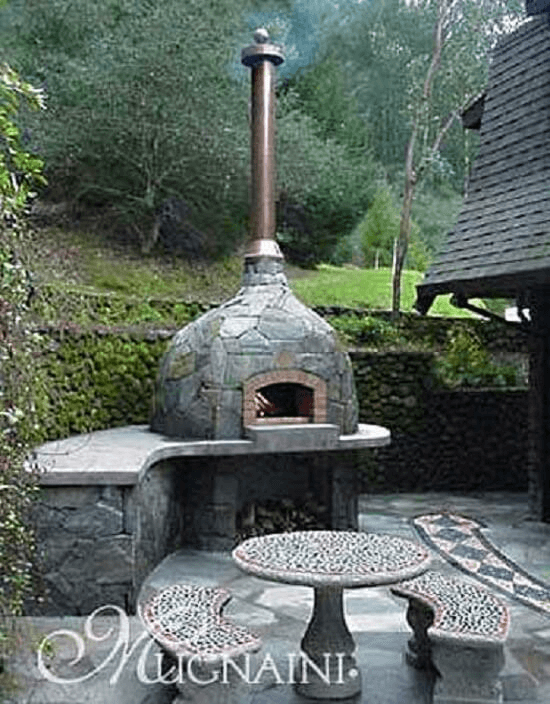
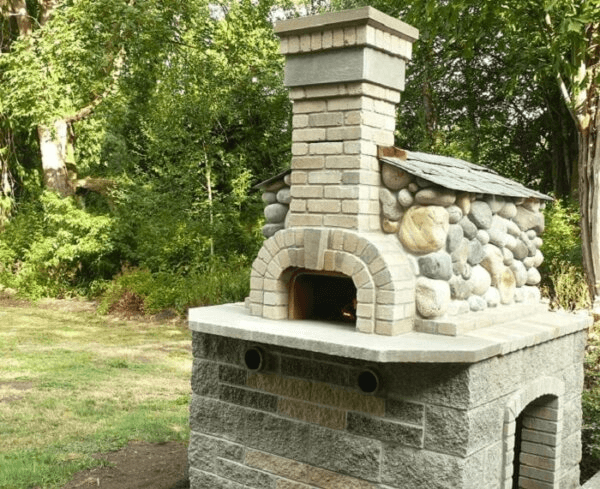
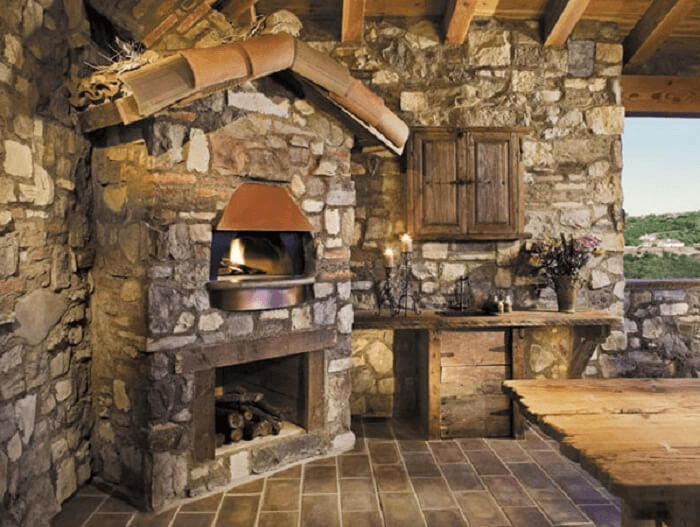
The following are some examples of stone ovens from around the world to help you dream and design.
Some Further Reading and Resources
The Bread Builders: Hearth Loaves and Masonry Ovens by Daniel Wing and Alan Scott
Traditional Oven: Information on the types of ovens you can build.




























You have given a lot of information about outdoor oven. This is one of my dream to have one if I buy or build my dream house….
I really enjoyed visiting this site as I plan to build an oven (maybe with a kit) in the lawn of my newly built home on Vermont. I want a bit of jazzyness with functionality and I noted a few here on your site which fit the bill. Thanks so much.
Thanks so much for all you have shared. I want to build an oven for myself then one as a gift for my sister.
How much do your kits cost. I have been wanting to make one of these for a long time.