
You can call them willow hedges but maybe a more accurate term? “Fedges” = fence + hedge. Willows, sallows, and osiers form the genus Salix (Latin for willow), a grouping of 400-ish species of deciduous trees and shrubs. Willow are native to moist soils in cold and temperate regions of the Northern Hemisphere.
Almost all willows take root very readily from cuttings. Young, thin willow cuttings are known as withies, longer willow rods are known as whips.
Why a Willow Hedge?

Willow is often used for streambank stabilization (bioengineering), slope stabilization and soil erosion control. Willows are often planted on the borders of streams so their interlacing roots protect the bank against the action of the water. Their roots are often much larger than the stem that grows from them. See how to plant willow cuttings to prevent erosion at a streambank: www.ksre.ksu.edu
How to Build a Willow Hedge
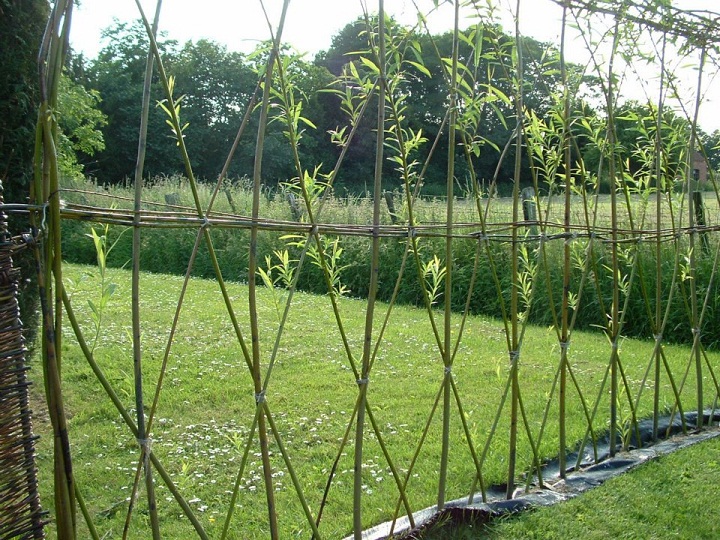
Simply make a hole in the ground with a metal bar, then insert the willow cutting. Weed control is important when starting a willow fedge and the cuttings should be planted into a weed barrier that allows water penetration, otherwise the weeds might suck away a bit of vitality from the young willows. As a general rule, shorter cuttings establish and grow best without competition from weeds, whereas longer cuttings have more stored energy and can handle a bit of competition. Willows prefer full sun but will accept part shade. Willows are also very adaptable as per water conditions once they are established and will also survive in poor quality soils.

Barbara, OvertheMoon / Flickr.
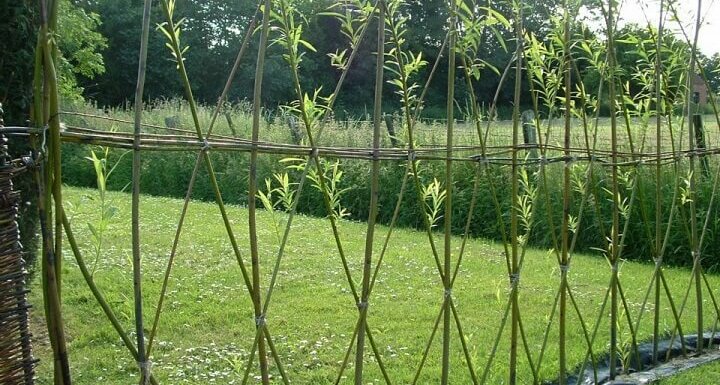
Living willow fence at Vevey Garden, Switzerland. Willow rods are pushed into the ground at an angle. The tops are tied to a horizontal, weaved in withy to give stability along the top. Willows have high levels of auxins, hormones that promote rooting success. The hormone is so prevalent that “willow water” brewed from willow stems, will encourage the rooting of many other plant cuttings as well.
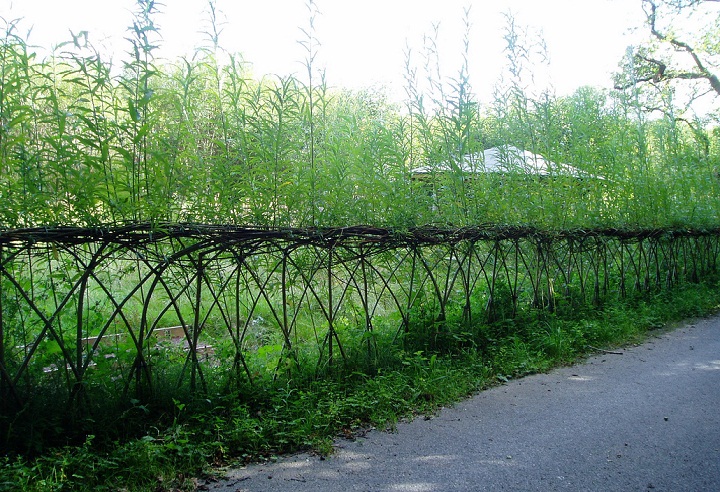
The angled rods tend to sprout along their entire length, while the uprights oft times sprout from the top only. Botanical Gardens of Wales.
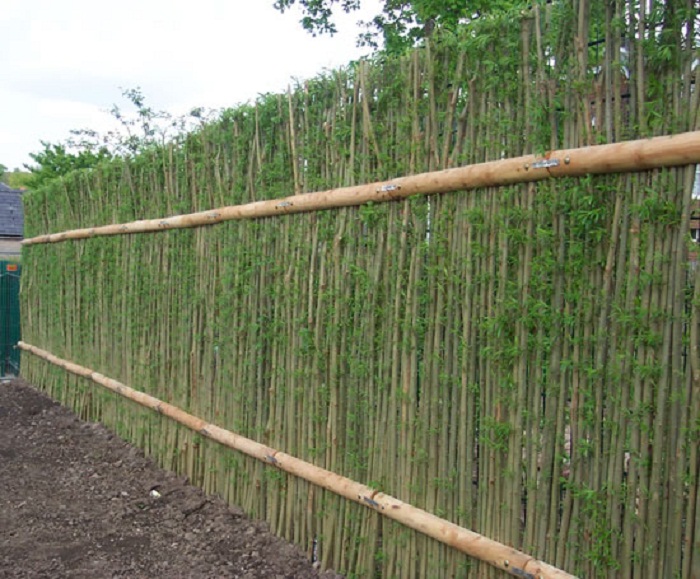
Living willow hedge panels by Green Barrier of Scotland. Living hedge sections come in pre-constructed 1m widths and in heights from 1.2 to 2.5m. They are planted directly into topsoil to a depth of 60cm (2 feet), to provide support while the roots grow. You can find cell-grown willows at External Works.

livingwithtwistedwillow.blogspot.com
Use Salix Viminalis and rub off the new shoots on the lower portions of the rods to achieve this open look.
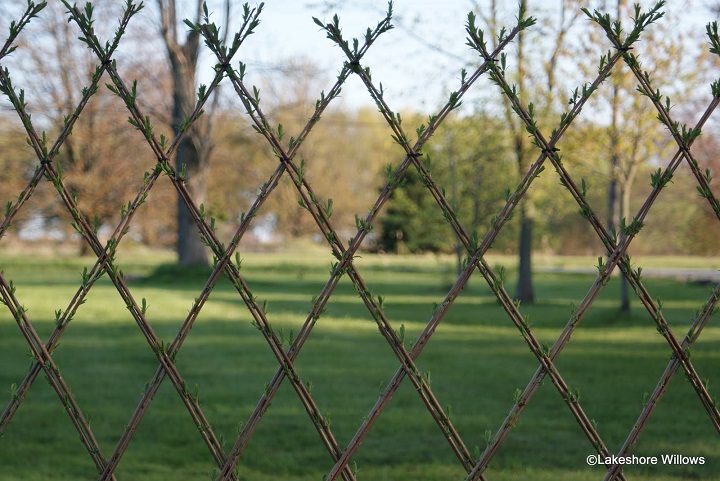
Salix ‘Americana’ planted in Canada. Ties are used to secure the structure while it becomes established. More pictures of this fence can be found at Willows Growing and Working With Willows website.
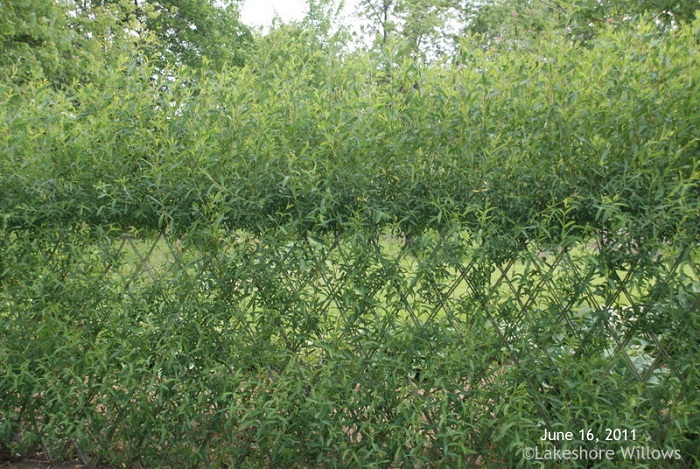
Same hedge as photo above, yet one year later. The fence was trimmed back once in the early fall.
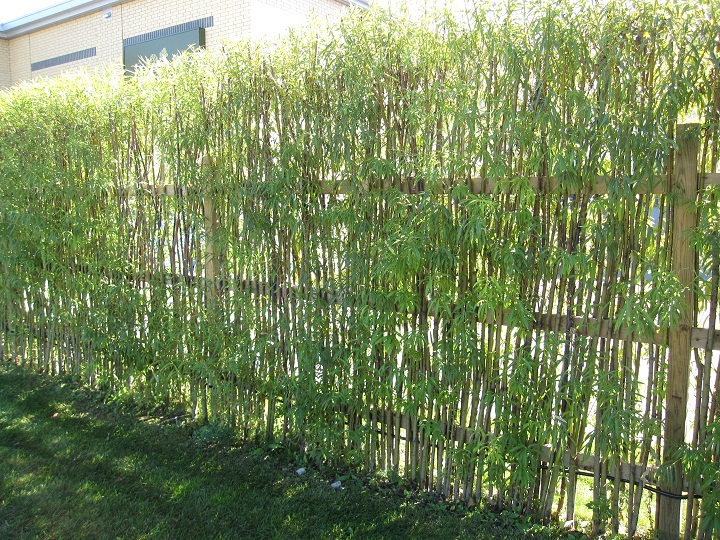
A wood frame with tall, straight willow branches stuck vertically into the soil and intertwined into the frame. Caution, willow roots are aggressive in seeking out moisture; for this reason, they can become problematic when planted near cesspools or drainage areas. They should also not be planted close to a building due to their roots aggressive and large size.
Buying Willow Hedge Materials
One of the best places to find willow tree cuttings for sale is on eBay, where you’re often buying direct from the tree’s owner.
If you don’t want to go the “grow-it-yourself” route, Gardener’s Supply Company has a terrific selection of willow fencing and expandable willow trellises.
Maintaining Your Willow Hedge
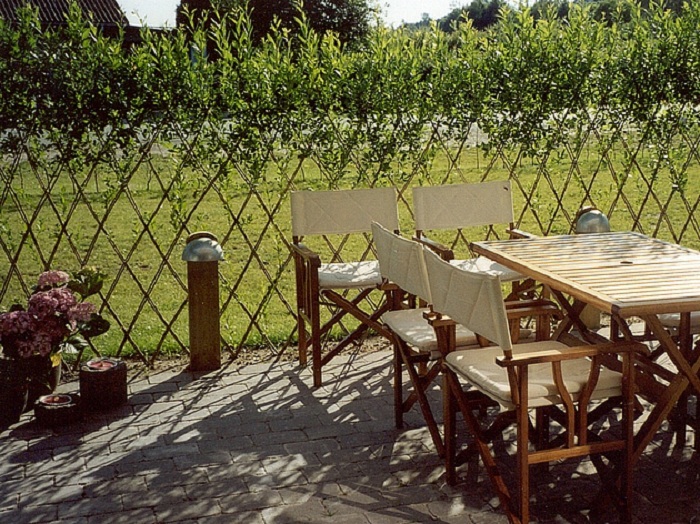
Green Barrier Fence, Europe and Canada.
The living fedge structure will require periodic pruning and weaving of new growth.
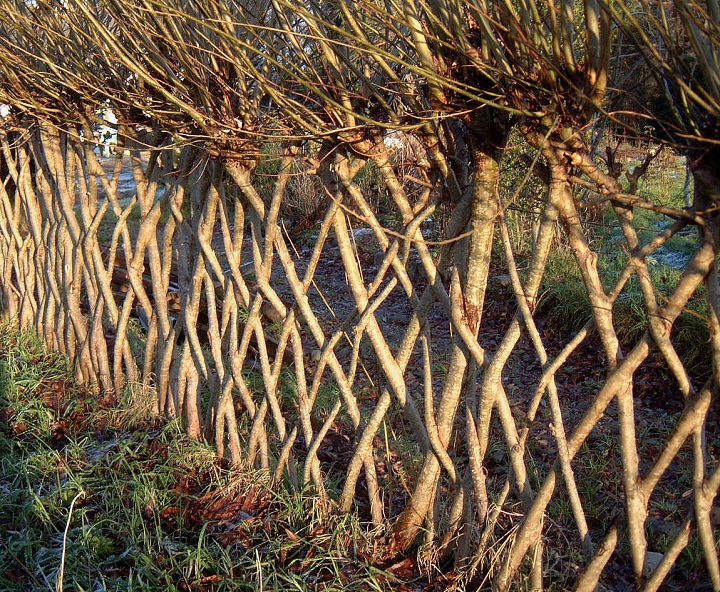
“During the summer any side-shoots are rubbed off to keep the lattice work of the fence clear of growth, but the top three or four buds are allowed to grow out. These shoots are trimmed back to the top of the fence in the winter.”
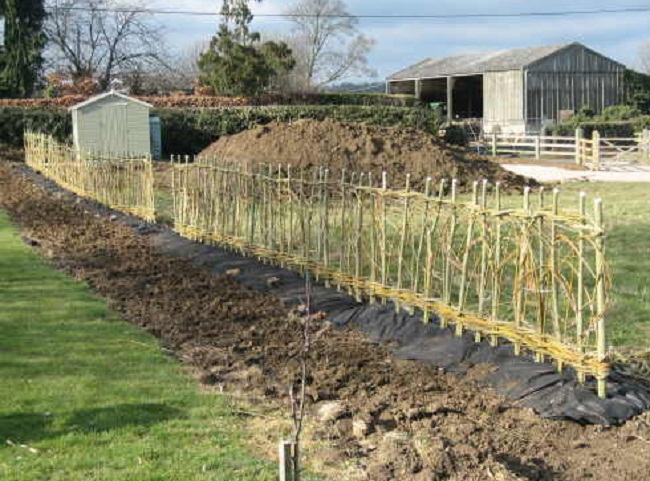
Living willow fence by Wassledine, Bedfordshire, UK. Additional cuttings can be added to secure the base. As they grow the lower shoots can also be woven in to thicken the fence.

Heavy pruning at the top encourages growth at the bottom.
14 Of The World’s Coolest Living Willow Hedges
1. Royal Caledonian Horticultural Society’s Garden
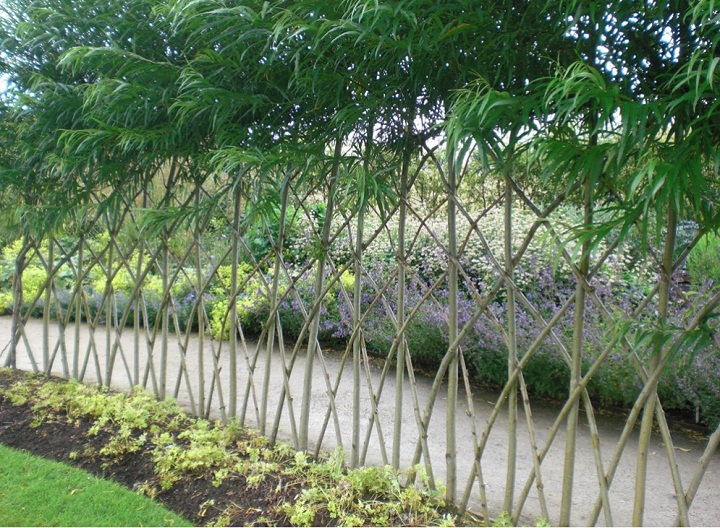
Living willow fence at RHS Garden Harlow Carr, Yorkshire. Picture was found on rchsblog.wordpress.com
2. Fence With A Diamond Pattern
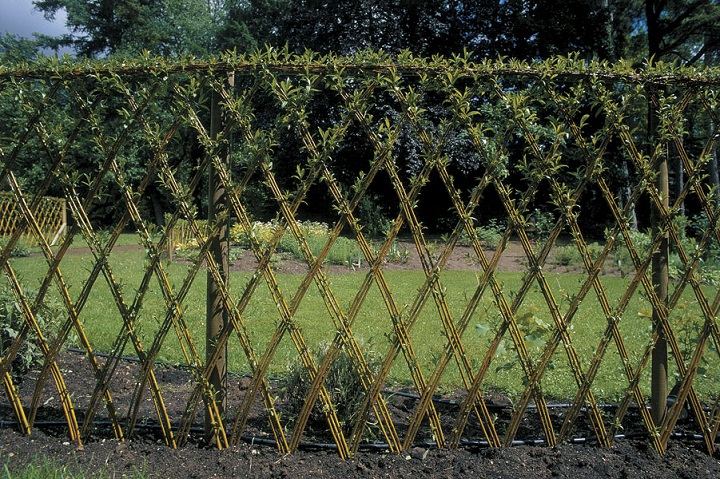
Three willow stems woven into a diamond pattern. The tops are tied to a horizontal withy to give some stability to the top. Photo: Peter D’Aprix: www.vegetablegardener.com.
3. Circular Willow Hedge
The circular patterns in this willow fence took time. You can see the intricate weaving of the willow on the top rings of the structure.
4. Willow Fence With Flowers

Living willow fence. Photo by Barbara, OvertheMoon / Flickr.
5. Vegetable Garden Surrounded By A Fedge
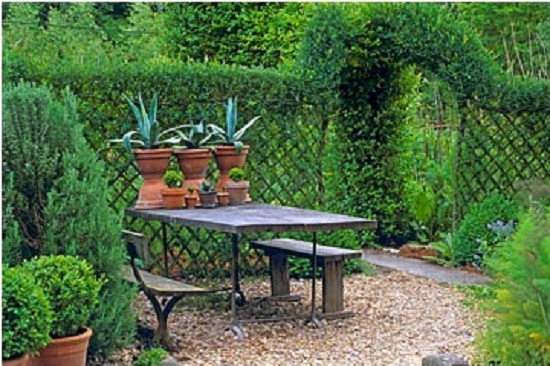
Living willow hedge surrounding a vegetable garden in France. Design: Judy and David Drew. Photo by Nicola Browne via GAP Gardens.
6. Living Willow Arbor

Lush new growth on the willow arbour at Whichford Pottery, Warwickshire.
7. Arch At Bealtaine Cottage

Willow arch at Bealtaine Cottage, Ireland. You can also buy seeds on the Bealtaine Cottage website.
8. Living Willow Arch

Living willow arch. See resources below for willow arch kits. Photo by Daniel originally found via “https://www.flickr.com/photos/53253992@N03/6058809040”
9. Thick Willow Fedge In Norway
In Norway, this thick fence provides a large amount of privacy.
10. Willow Arch In England
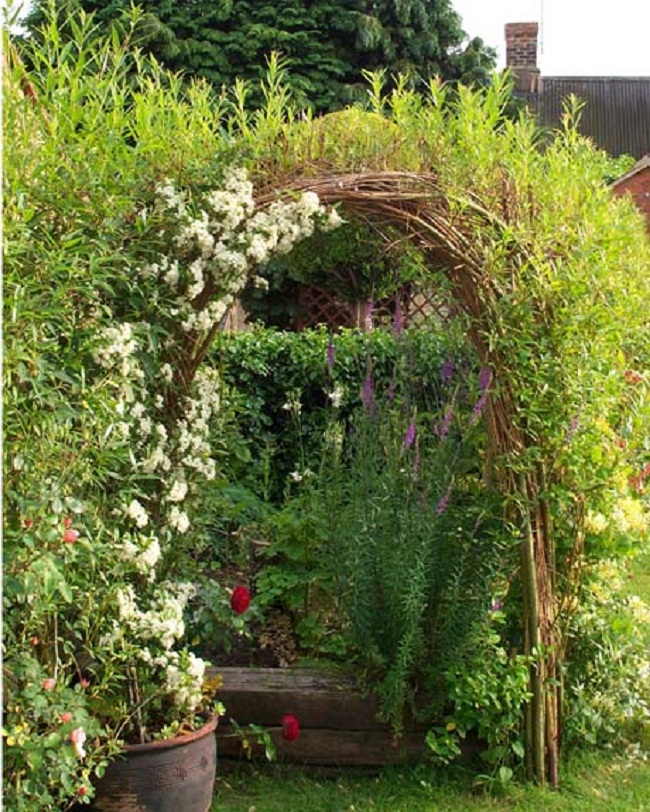
Living willow arch. A 4′ x 7’6″ x 2′ arch installed for 130 pounds in Suffolk, England. On their website, Natural Fencing sells living willow arches.
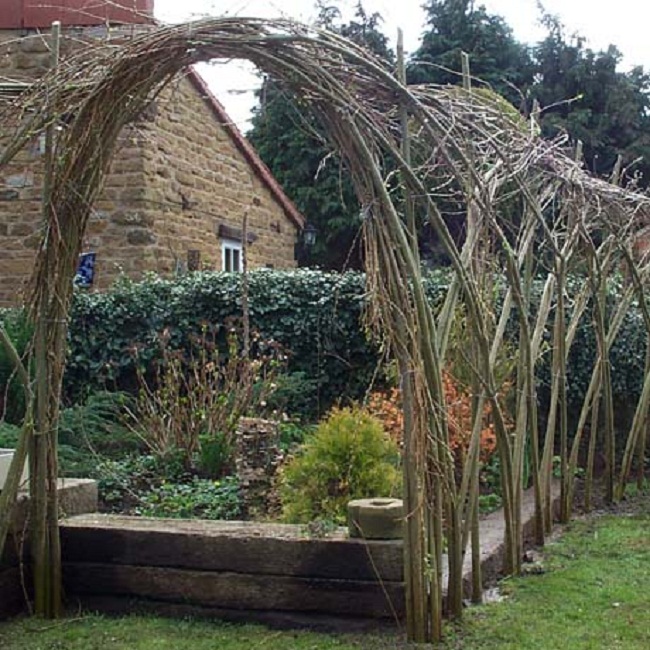
A living willow arch. As photo above, but in winter. Photo can be viewed at www.naturalfencing.com.
11. Willow Fedge By Ryton Organic Gardens

Fedge in the winter at Ryton Organic Gardens. Living structure kits by Ryton Organic Gardens can be found at www.thewillowbank.com.
12. An Urban Willow Fence
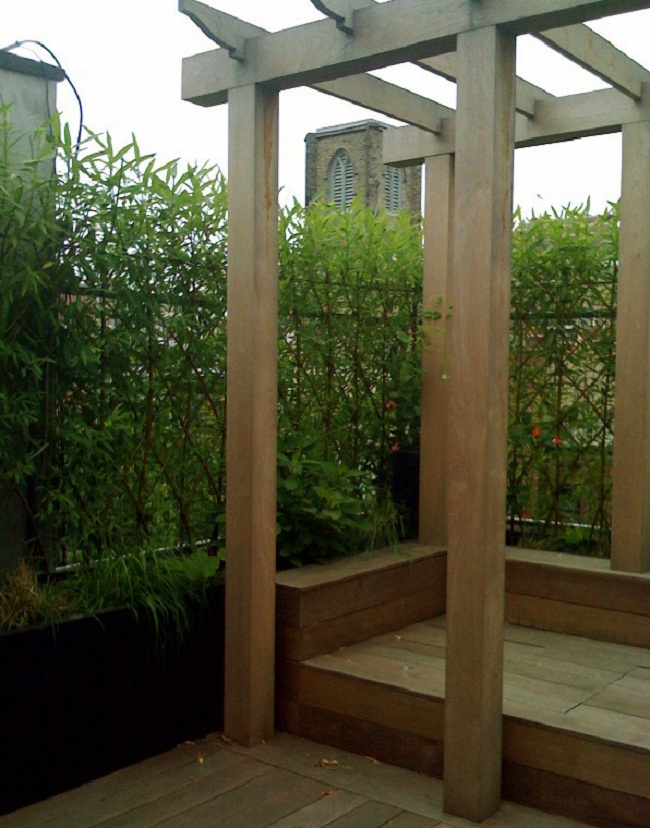
Living willow privacy screen in urban settings. The photo was found at englishbasketrywillows.com. More information about fedges can be found at the English Basketry Willows webpage.
13. Sitting Area With A Willow Arbor
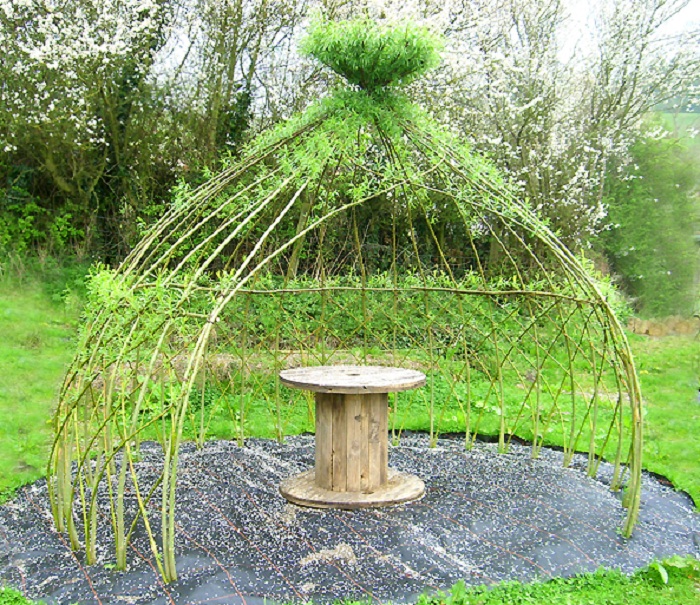
Living willow dining arbor to protect you from the sun. Kit for sale here: www.thewillowbank.com
14. Stunning Dappled Willow
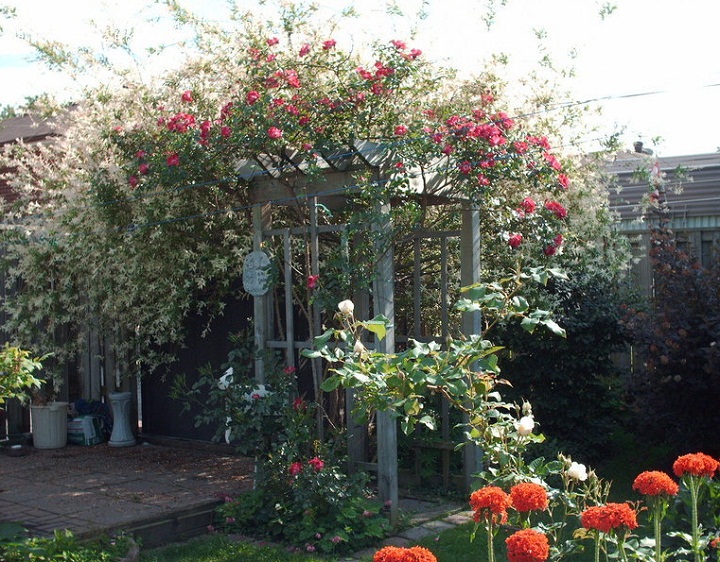
A rose in front of Hakuro Nishiki or Dappled willow. This is just a shrub not a fedge, added here because this willow variety is striking. The slender leaves emerge as glossy bright pink, then mature into a white, green and pink variegation. Regular pruning encourages the best color. Stems are red in the winter. Prefers moist soils. Image via: davesgarden.com
The Willow Palace

In 1998, natural artist and architect Marcel Kalberer created the Auerworld Palace, a pavilion made of living willow trees. It is also known as the “mother of all willowpalaces.” It has become a tourist attraction for the region between Weimar and Naumburg, Germany. Photo found at www.arcprospect.org.
Willow Hedge Online Resources
Yorkshire Willow: Seventeen willow varieties for fencing
Bluestem Nursery: Willow for living structures
Bluestem Nursery: Which willow where
Vermont Willow Nursery: Varieties of willow
Buckingham Nurseries: Read about the different Willow Species for Hedging
Popular Species for Willow Hedges
Rods are available in 1.5m, 2.0m, 2.5m, 3.0m and 3.5m lengths.
Salix Viminalis (produces long, straight rods without many side shoots)
Salix Tortuous (Corkscrew or Curly Willow)
Salix Alba Vitellina (Golden Willow)
Salix Alba Chermesina (Scarlet Willow)
Salix Purpurea (Chou Blue)
Salix Sachalinensis (Sekka)
Salix Triandra (Black Maul, grows fast)
How to Make Willow Water
Root azaleas, lilacs, and roses by soaking two large handfuls of pencil-thin willow branches cut into 3-inch lengths in two quarts of boiling water and steep overnight. Refrigerate unused water.
How to Protect Willow Hedges from Deer
Deer will eat willow when there is nothing else to eat. But if you desire your edge trimmed periodically this might not be a bad thing. Willow rebounds quickly. Salix Purpureas is the most bitter and therefore least-eaten willow.































For the back fence
Hi! would you know which type of plant would be good in making a living hedge for a tropical climate?
I’m going to try oleander this weekend. It might work for you too- anything with long thin branches will make the shape, and oleander also takes root easily.
Oleander is highly toxic. Not a good plant at all to have in a garden
Some willows are prone to disease when exposed to excessive warmth and humidity, so you need to pick your species with care.
Coastal plain willow, pussy willow, desert willow and Arizona willow all do well with warm temps.
If you have a local nursery, I would check there. Hope they grow well for you.
thank you
I have looked at all your creations and ideas. Will be using many in my own yard. Thank you so much for the share.
Carla
Love this site lots of creative ideas.
Willow fences…just the thing for my garden…thanks!
I was wondering if you had to worry about off shoots or runners coming up from the ground around the fence (like raspberry). I live in Northern Ontario and we have TONNES of red willow and I need a new fence between mine and my neighbours yard…this would be cool but I don’t want my neighbour to have to worry about runners and issues with insane roots that will destroy our already dilapitated underground infrastructure (ie. water lines and plumbing)
I have always been fascinated with these type of fences, now I know how they are done and with a variety of styles too. I can’t wait to do this at my home. I will definitely be shopping at online plant nursery for all my living hedge needs.
greetings from gravenhurst, ontario, canada…i design and build rustic furniture and i’m looking for a steady source of furniture grade willows…while living and working in california i discovered desert willow and loved it…i’m having difficulty finding something similar here in the frozen north…you can see my work at http://www.rustixdesign.com
thanx…stanley 705.687.8436
can living willow be adaptable in the Philippines?
Any way there may be a company in Mchigan? I’d love to try along my fence line! I have a hundred feet of chain link that’s old, & would love to transform to one of these beauties!
Will these living willows grow in the Georgia [Middle Georgia] USA? Do they need water and fertilizer care? To make a fence 50ft long, how many willows should I plant? Please answer. Thank you.
Hi Karla,
I am sure that many species of willow will grow in Georgia. Yes, they do need water. Please contact one of the willow distributors listed as they would know how many cuttings and of what species you would need. Thx
I live in mount Uniacke Nova Scotia and have a substantial amount of willow canes which are available each spring.I trim them by hand and it takes about 40 man hours to complete. These are 20 feet tall and I trim back to 10 feet.Each cane would be 3 -3ft. plants. If interested please contact me at rediker1962@gmail. com
Thanks. Chris
Hi Chris,
I’ve been searching how to start willow hedges and saw a post you wrote in 2014…we live on Isle Madame in Cape Breton and I would love to take some clippings off your hands…it’s been 7 years…so I’m wondering if you still have these available each Spring?
Thanks!
Lisa
Hey Chris,
I’m in Halifax, I’d be interested in your willow canes. Shoot me an email. I’m trying to outline my acreage with a willow windbreak. I have a really high water table (maybe 2 ft below ground ) and willows do really well here. My email is herringchoker1971@gmail.com
Thanks,
David
Can you recommend the least aggressive/invasive species of willow for living willow fences, i.e., least likely to spread through the root systems? I’m very interested in these kinds of fence/privacy screens but know that some species of willow can take over a huge area quickly by spreading through their root systems. I would want a living willow fence to ‘stay put’.
Will Pussy Willows work for a living hedge?
Willow fedges wind tolerance is variable it seems.
Tornado deflection. Amazing windbreaks. Sheep in Pembrokeshire colored.
i like to know do you sale something the same to grow in miami fl send me info
Hi, I would like to know when is the best time/season to trim willow and when is the best season to plant it. Also, what is the best time to cut and store it for basketry projects in the future.
Thank you.
Coleen
These willow hedges remind me about Alice in Wonderland a lot! It would be great to make them at my house! Kids will play around them all day! Thanks for sharing it here!