
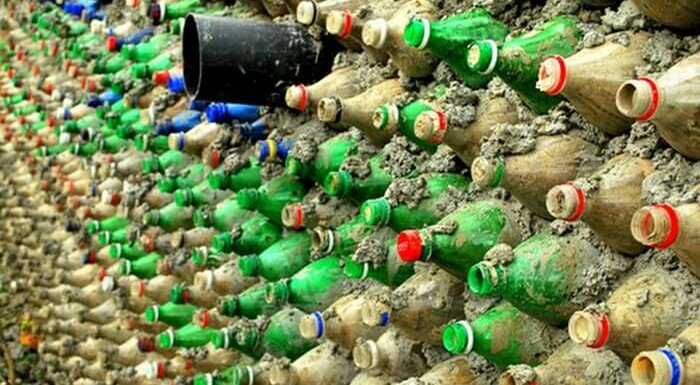
School buildings are the most important structures we can build—but they often go unbuilt because of a lack of available materials. Abundant plastic bottles could make the difference.
Pepsi’s Plastic Bottle School Project in the Philippines
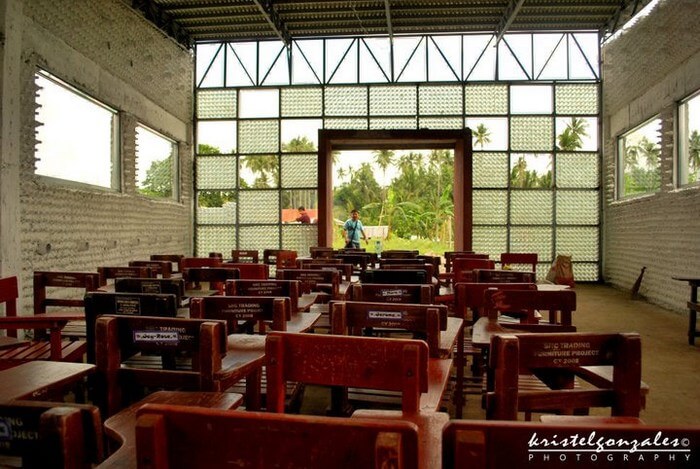
Pepsi partnered with the My Shelter Foundation to build this school house made of 9,000 plastic bottles in San Pablo, Philippines. Thousands of volunteers recruited by Pepsicollected the used bottles, helped to raise awareness of the Philippines classroom shortage and participated in building the structure. Pepsi’s clean-up campaign website, sarapmagbago.com and lots more photos here: facebook.com/pepsisarapmagbago Photo © Kristel Marie Fuentes Gonzales.
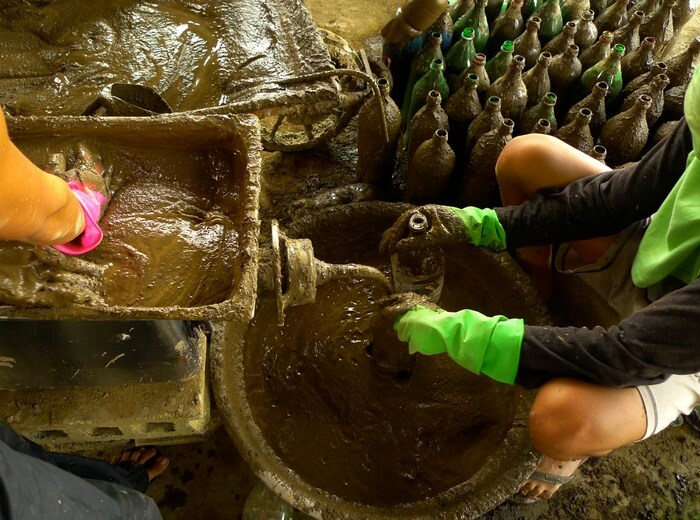
After the 9,000 bottles were collected each 1.5 and 2-litre bottle was filled with adobe (sand, clay, and water with a bit of straw, twigs or manure thrown in). This machine made the filling much easier.
Pic: 1.bp.blogspot.com Video: www.youtube.com
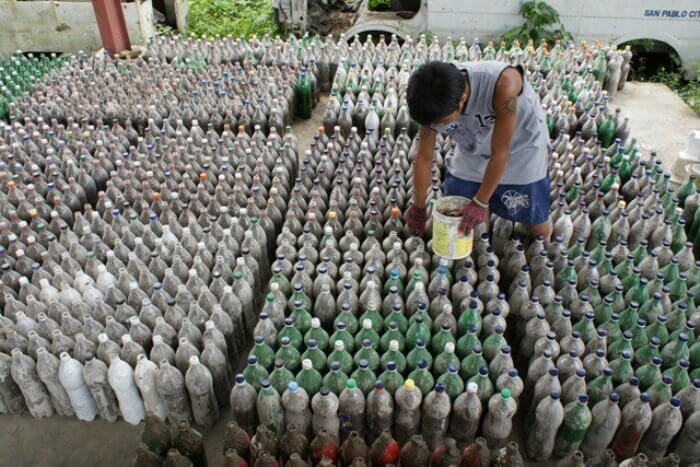
The filled bottles set out to dry…
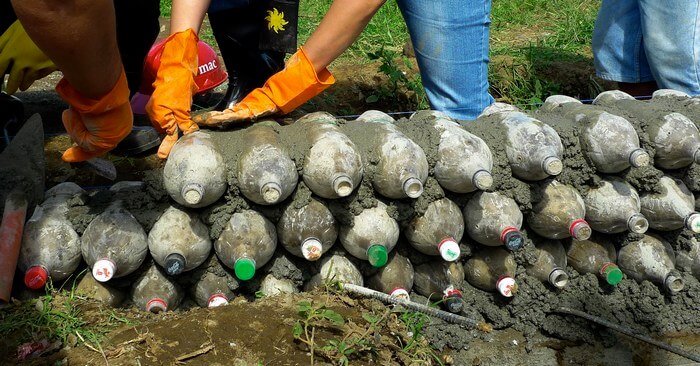
The building process begins. Pic: micealiling.com
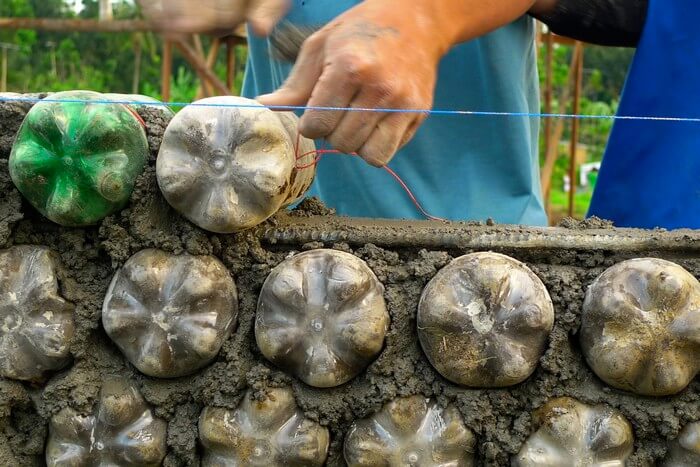
String is used to keep the bottles in place as the adobe is being applied.
Pic: micealiling.com
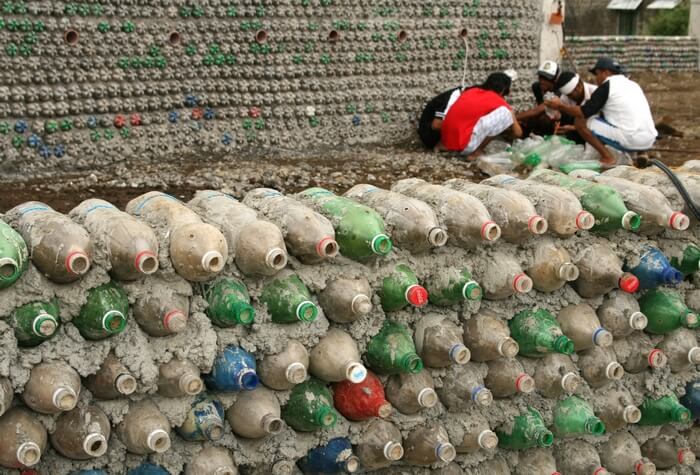
Ran out of caps…
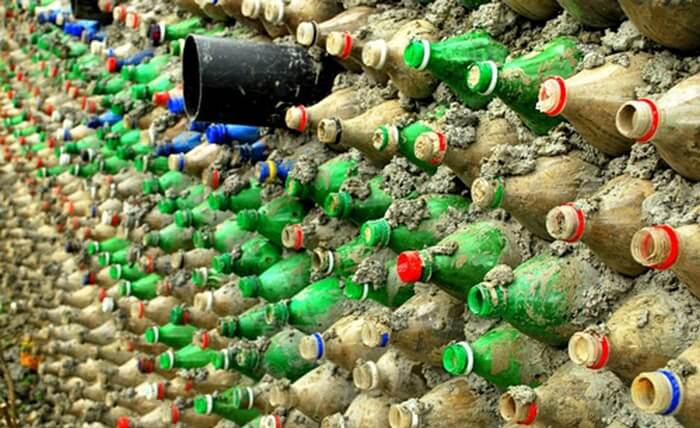
A bit more cement will be applied and smoothed out.
Photo © Kristel Marie Fuentes Gonzales
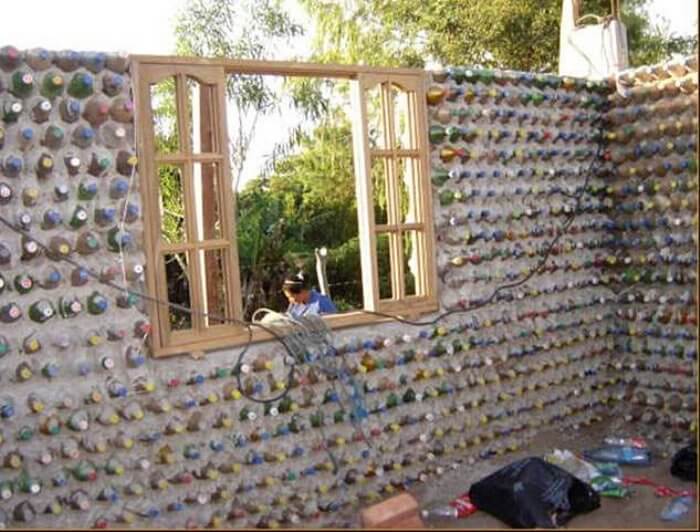
Photo © Kristel Marie Fuentes Gonzales
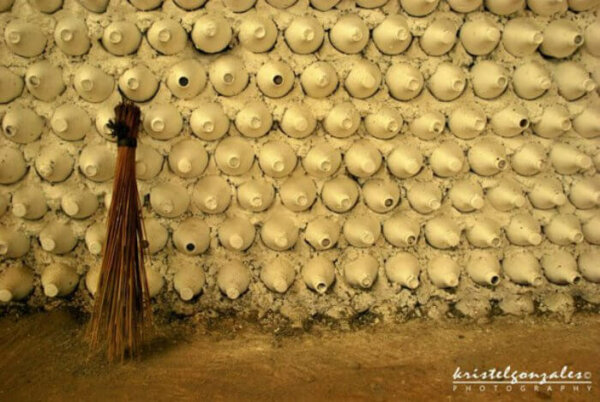
Almost there. The roof is made of compressed tetra packs.
Photo © Kristel Marie Fuentes Gonzales
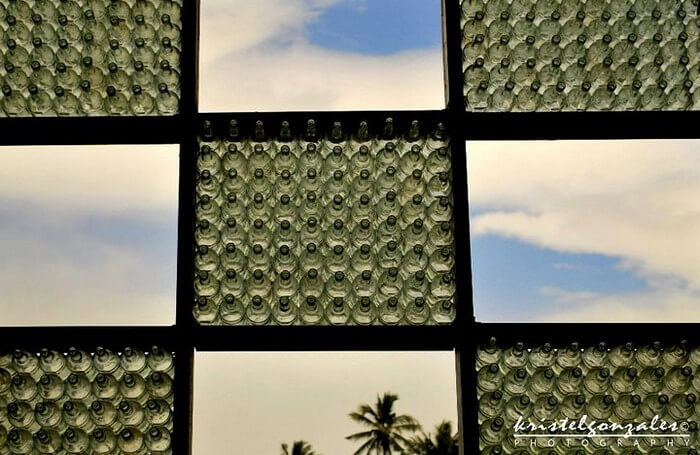
One wall is made of glass bottles.
Photo © Kristel Marie Fuentes Gonzales
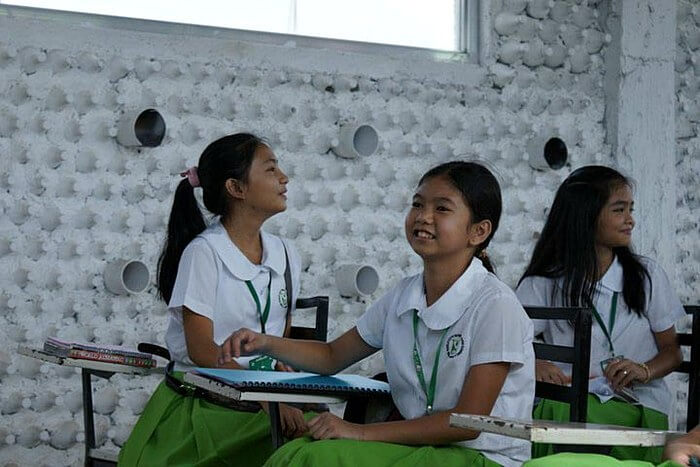
The inside walls were whitewashed.
Pic: campaignbrief, bottleschoolproject.org
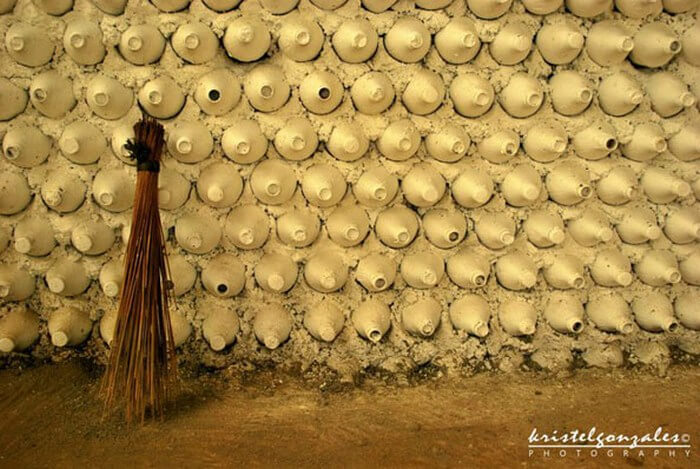
Photo © Kristel Marie Fuentes Gonzales
www.bottleschoolproject.org
A Plastic Bottle School in Guatemala
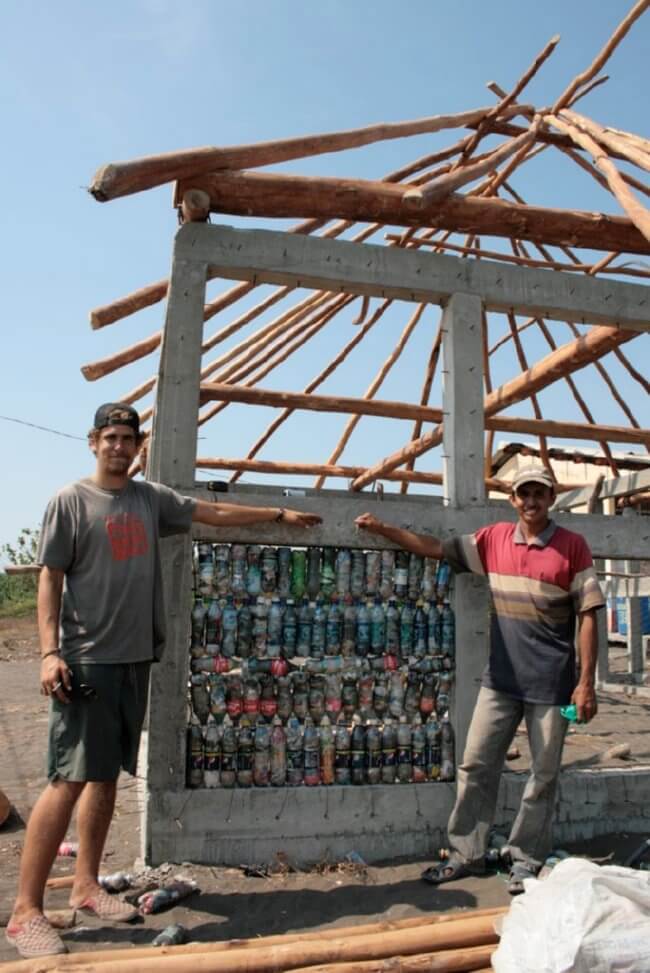
In Guatemala, visiting volunteers with the help of the community, build plastic bottle school houses using a construction method pioneered by non-profit Pura Vida. The first plastic bottle school in Guatemala was started by volunteers in the Peace Corps and when they ran out of resources they called on Hug It Forward, an NGO that has now helped build numerous plastic bottle schools accross Guatemala. hugitforward.com
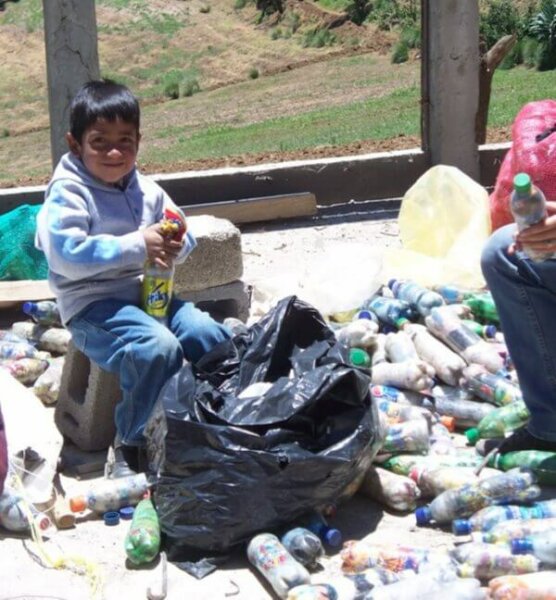
First, the students and volunteers stuff the plastic bottles with insulating trash. Each student is asked to collect and fill at least 20 bottles. They stuff each bottle with plastic waste, such as styrofoam, snack wrappers and plastic bags – the more compacted, the sturdier the building blocks and the less garbage remaining on the streets. flickr.com
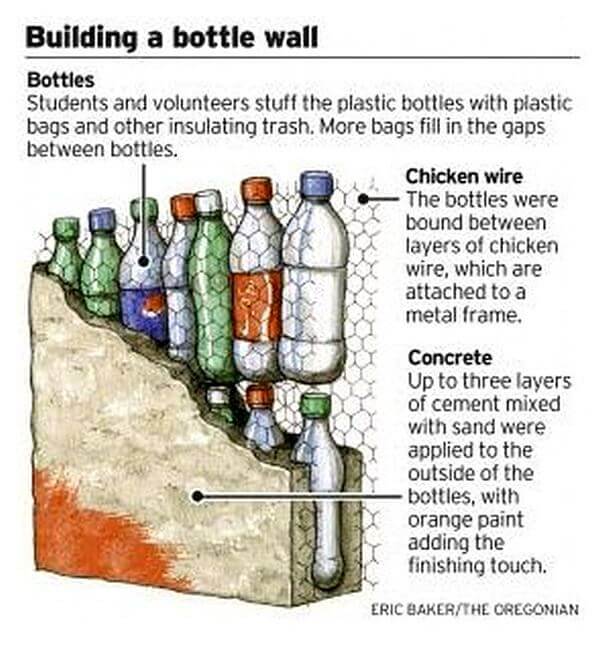
Hugitforward builds bottle schools a different way.
hugitforward.com
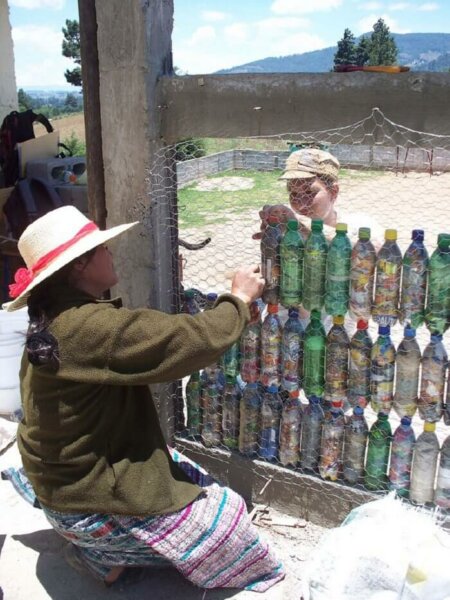
The stuffed bottles are tied with string to keep them in place. Pictured is the 5th Hug it Forward school, under construction in La Cereza, finished July 2010. hugitforward.com
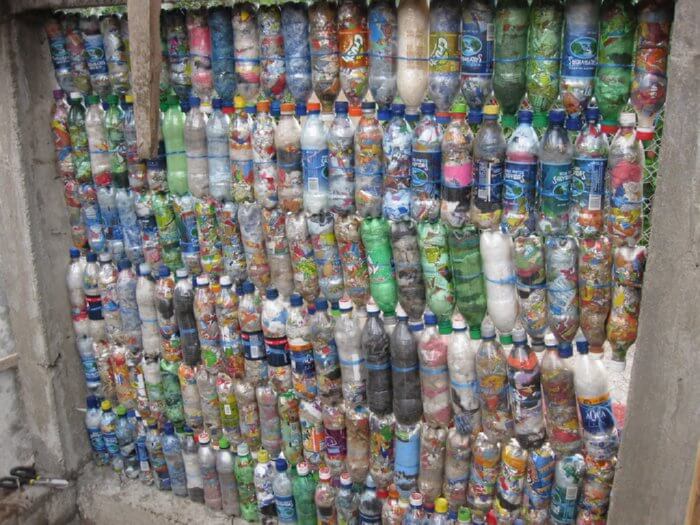
Bottles strung to chicken wire on one side. Now the chicken wire will be placed on this side as well. flickr.com
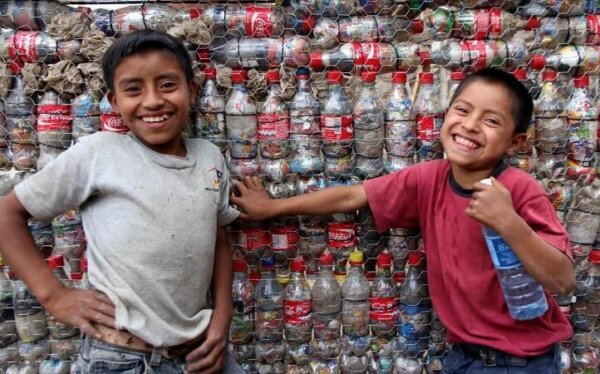
Plastic Bottle Wall.
hugitforward.com
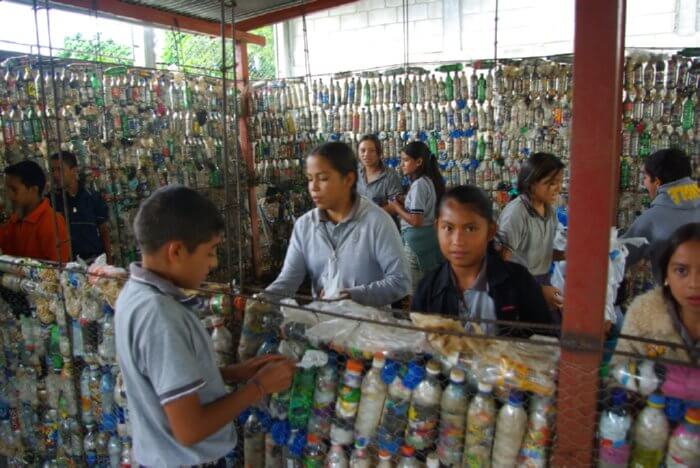
Students stuff waste plastic in between the bottles. flickr.com
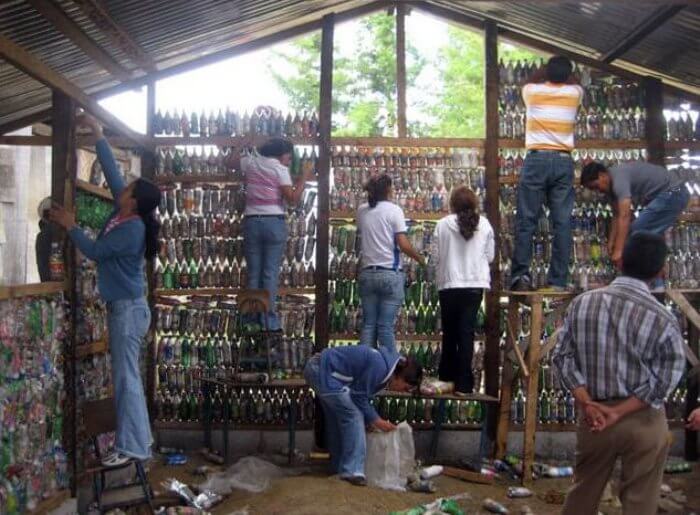
The older students are called in for the higher work. www.flickr.com
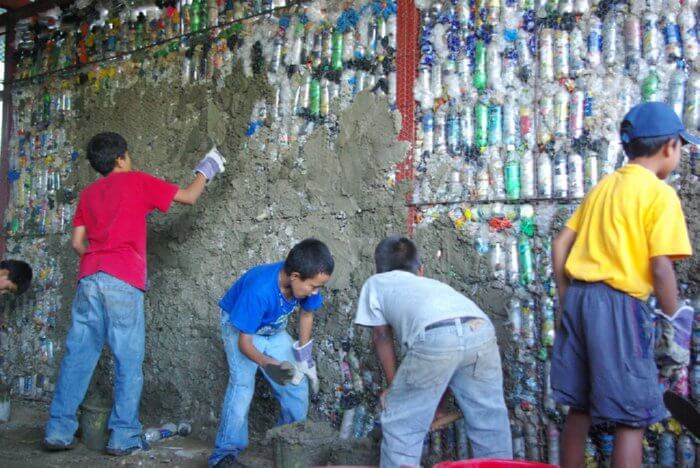
Applying cement to the inside of the building…
Students help sift the sand, mix and then apply cement that was donated. www.flickr.com
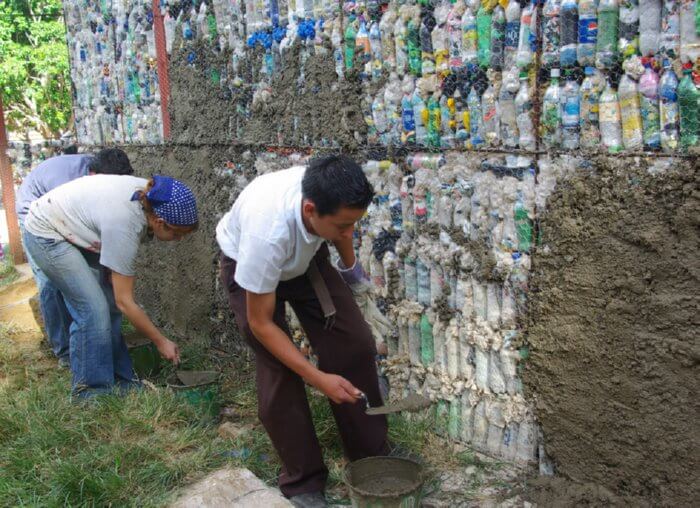
And on the outside… Three layers of cement are applied. www.flickr.com
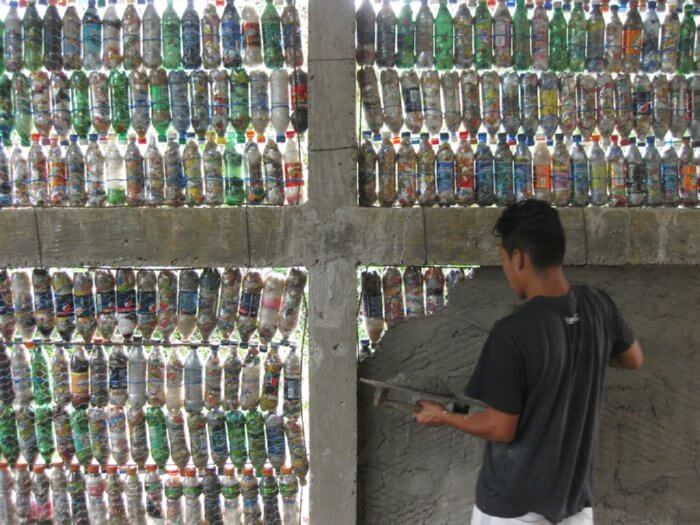
Neater job = better trowel…
This is the 5th Hug it Forward school, under construction in
La Cereza, finished July 2010. hugitforward.com
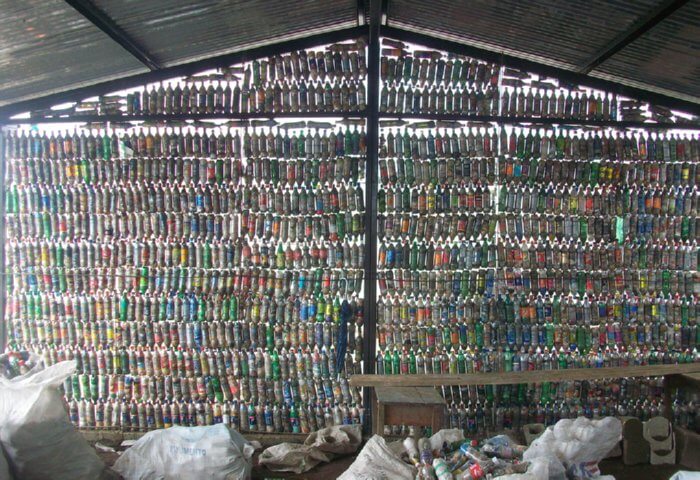
This school used metal frames instead of cement posts.
hugitforward.com
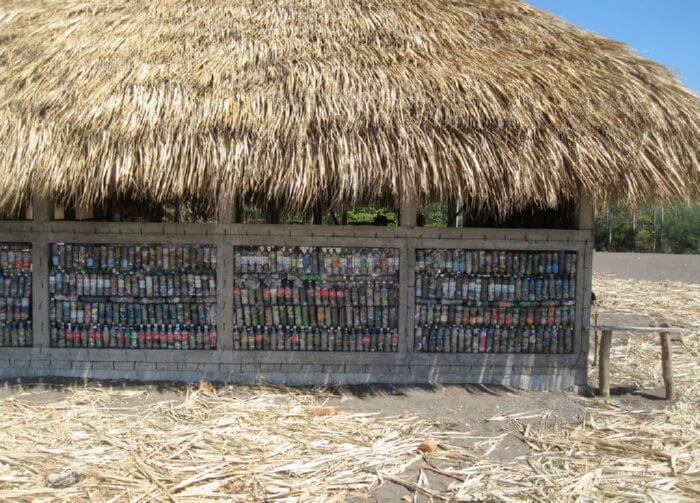
This one with a thatched roof. flickr.com
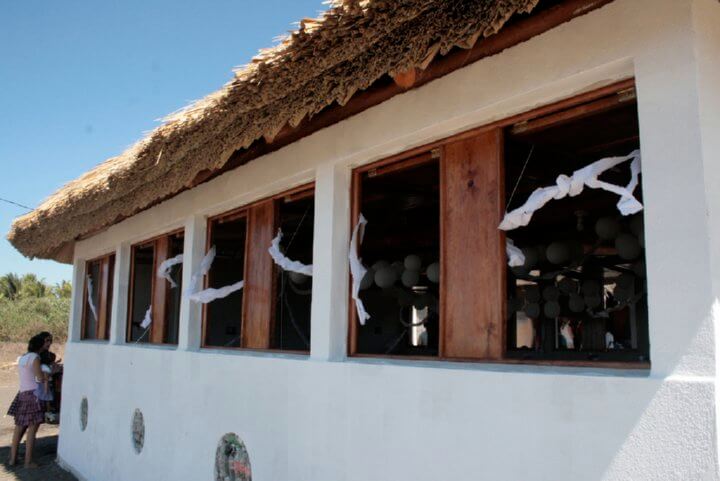
The final look – you would never know the main ingredient if they did not leave cutouts… flickr.com
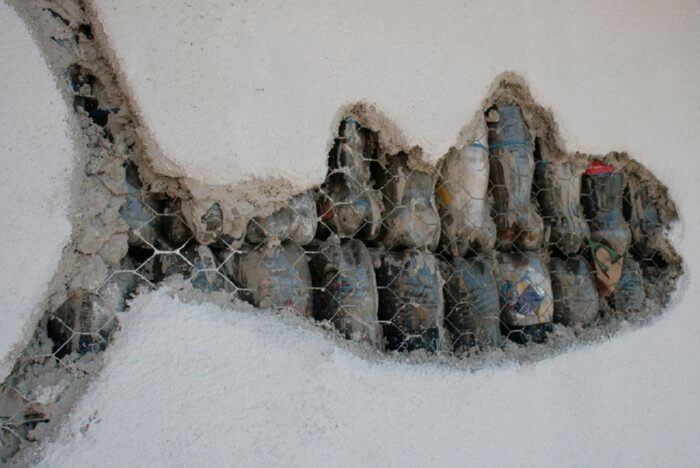
A cutout. Just a reminder…
hugitforward.com
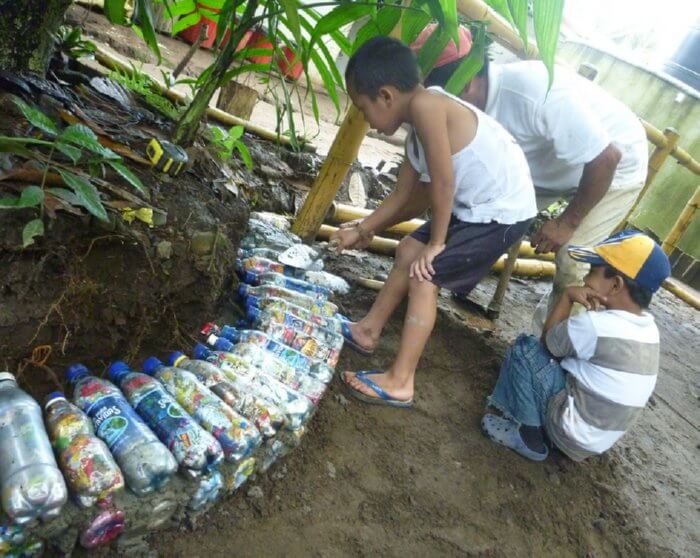
Outside — under construction. A bench surrounding a tree. flickr.com
How To Build A Plastic Bottle School
Bottle Construction How-to
By Laura Kutner, Peace Corps/Guatemala Source: peacecorps.gov
- Make sure your community is involved and that you have a safe/approved location to build.
- Make sure you have a budget and enough funding.
- Collect and stuff bottles and gather lots of inorganic trash. Each bottle and all of the stuffing material has to be clean (rinsed in water) and dried. If anything is wet or dirty it will become moldy and start to smell. Organic trash, such as paper, cardboard, dirt, and rocks, cannot be used.
- Set up a frame, foundation, and roof comprised of either wood, metal or cement columns.
- Start putting chicken wire on the outside of the frame, then work on the inside in sections, putting in the bottles while you slowly connect the inside layer of chicken wire to the outside, securing the bottles tightly.
- Continue section by section, until bottles are placed, then stuff all empty leftover spaces with inorganic trash.
- Test the cement mixture (no limestone) to make sure it sticks. Then start placing the first layer of cement.
- When this dries, start a second layer.
- Finish with a third layer then lay the flooring.
- Inaugurate and celebrate!
Hug it Forward’s Bottle School Manual
“The Bottle School Manual” a step-by-step guide to building a bottle school, complete with pictures and diagrams of each stage of the construction process. bottleschools.org
Another organization working with plastic bottles in Latin America: lwhome.org
A plastic bottle latrine with composting toilet: catorcekt.wordpress.com
Hug It Forward – 3 Months of filming compressed into a 3 minute video. This is a good overview of the hard work, dedication, win-wins, and excitement surrounding Bottle Schools.





So glad to see one site posting all this info about bottle walls!
I’ve been experimenting with using plastic mesh tubing to hold a variety of plastic trash. Even non-recyclable plastic scrap including foam can be used as filler in walls. I’ve sewn one side of the mesh tubes to the next one, and then used earthen plaster between them to stiffen the row of tubes up. A plaster of light straw-clay then firms it into a plane. I would use earthen or lime plaster inside and cement stucco or a lime plaster on the outside.
See my proposal athttps://www.jovoto.com/contests/300house/ideas/12646
and I’ll have more info at my website http://www.SimpleEarthStructures.com
We need to use that trash that’s in the way!
I am taking a seminar on this topic and i want some informations about this construction… and about the characteristic properties of the houses made of bottles.
This is a real shame, Pepsi is using this as greenwash/social responsability.
15 years ago these bottles would not have existed in the Philipines, refillable glass would have been used instead. Now bottlers are moving towards disposable plastic. It’s nice to build schools, but can enough buildings ever be built from plastic bottles to justify Pepsi and Coke trashing the environment with throwaway bottles? this is a building material that should not exist.
I absolutely love the things i see people doing on here! My kids keep begging me to let them do products to recycle stuff at home, and this gives me so many ideas that could occupy us as a family. the sheds and huts I see being built on here would be a great opportunity for any child to learn how to do with their families! If you have plans or directions you could email me teaching how to build different structures using the glass and plastic bottles, I would love to learn.
Love the work – I want to try to build one of these in Papua New Guinea
This work looks inspiring. I am gong to the Philippines in a month, are the currently any projects like this that i could help with? I would love to learn more about it. Or any other eco-building techniques.
love the things this work looks inspiring.
love the things this work looks inspiring.
Well done but not making plastic AT ALL is still the ultimate goal.
Best wishes.
i would like to learn more about septic tanks and toilets that can be built with plastic bottles.
thank you
regards
nayana
I am a missionary in Guatemala. Do you build buildings for feeding centers?
Hi Kirk, Please contact: Heenal Rajani heenal@hugitforward.org with your questions. Thx! Hope all works out.
Its a great initiative, am starting the same in kenya. (laikipia region) and could some one help in terms of ideas.
Dear Sir/Madam,
would you please send me the manual via my email?
Thanks
I am sorry but I cannot send the manual via e-mail.
But here is the link to it: bottleschools.org/wiki/Main_Page
Merhabalar pet şişe ev yapımı ve çit yapımı hakkında bana yardımcı olurmusunuz.ufak bir arsam var.etrafına çit yapmak istiyorum görgü çeşitleriniz farklı videlu anlatımı varsa birde pet şişe ev yapımı içinde videlu anlatım varsa çok mutlu olacam kolay gelsin
hi. Im a high school teacher from makati. Our school wants to donate our PET bottles to you guys to help build classroom. Who can we coordinate to so that we can give you our bottles? Thank you very much
Si esto se implemente en Mèxico, podriamos avanzar muchisimo!
Gracias y felicitaciones a esos chicos trabajadores!
Hi
I am studying architecture.the bottle bricks a very impressive method.I want to use bottle bricks at my project. I would like to introduce this method to my class.Do you send me the pdf version of the plans and drawings?
Thank you
I ;like what I saw. wow Plastic bottles to construct building. Marvelous. God bless!
Greetings! I am looking to see if you guys are interested in opening a new location? I do not have any place in mind. However, I looking for a long term location to serve or help coordinate groups!
This concept is awesome. I have a straw bale home and a Permaculture certification. This gives me hope that maybe we can pull ourselves out of the mess that we have made of the planet. How do I find workshops?
tis is so amazing how they are building things like this
Hi. Good day. I am a public teacher in a rural area in the Philippines. I’m inspired and I wanted to know more about this project. I’m interested to have this project in our school community to lessen the plastics. thanks