
Friedensreich Hundertwasser, the father of the Green Roof. Born in Austria 1928, died at Sea 2000.
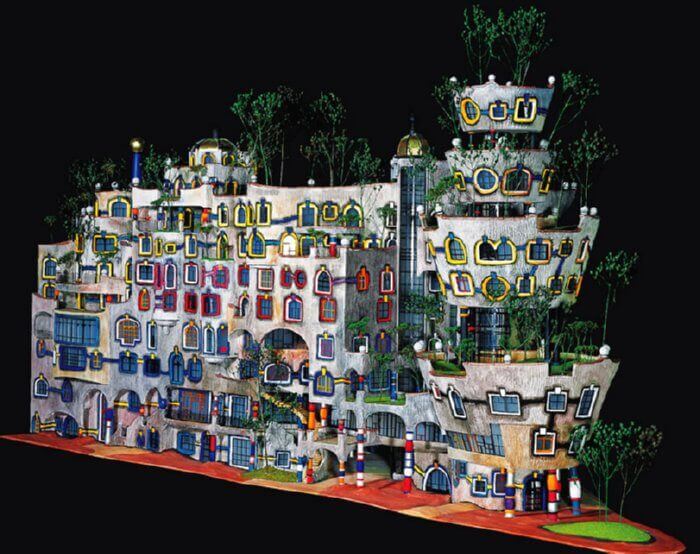
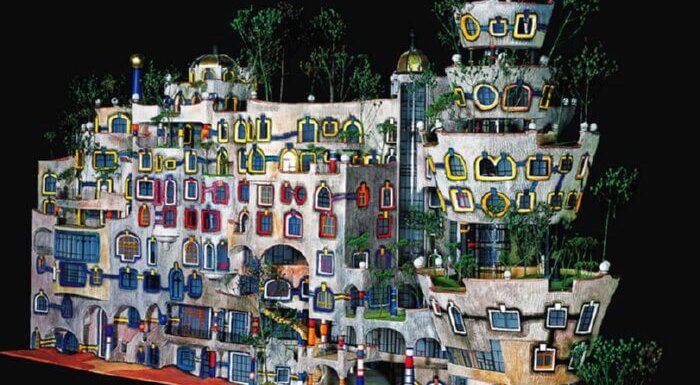
Hundertwasser- Model for Hohe-Haine (High Groves), Dresden, 1998. hundertwasser.at “The colourful, the abundant, the manifold, is always better than mediocre grey and uniformity.”
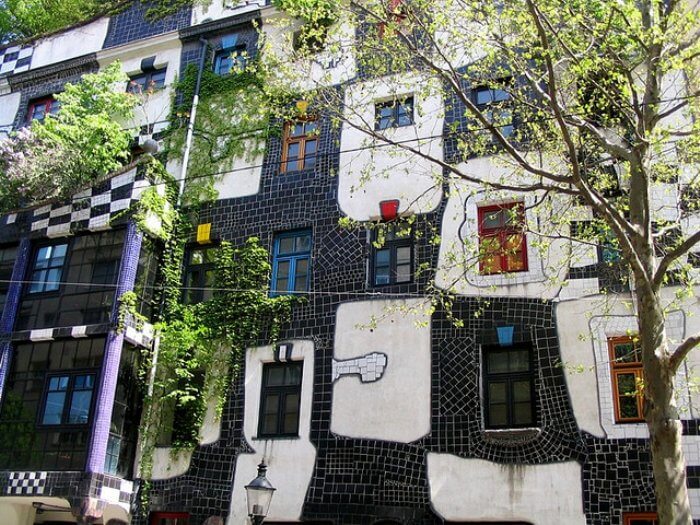
Hundertwasser- KunstHaus, Wien, 1989-91. Hundertwasser wrote many manifestos one of them being the ‘Mouldiness Manifesto against Rationalism in Architecture.”
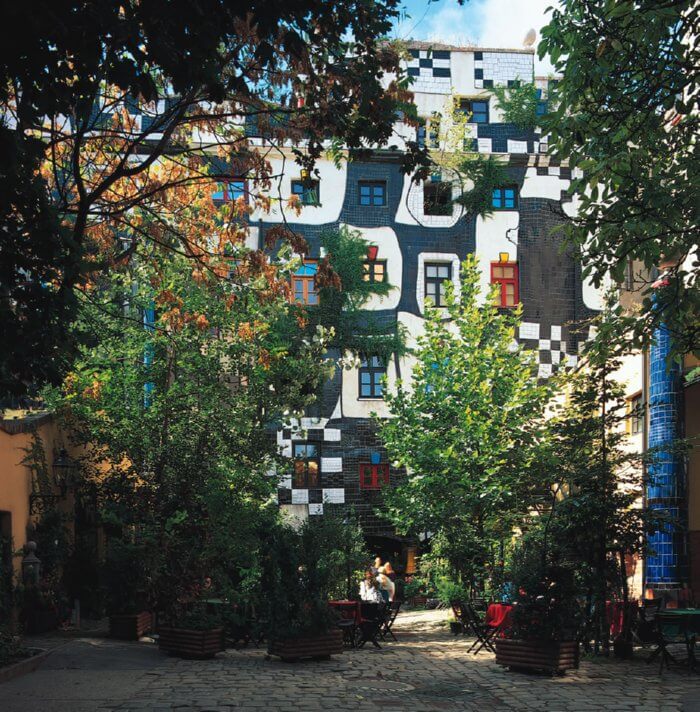
Hundertwasser- KunstHaus, Wien, 1989-91. hundertwasser.at
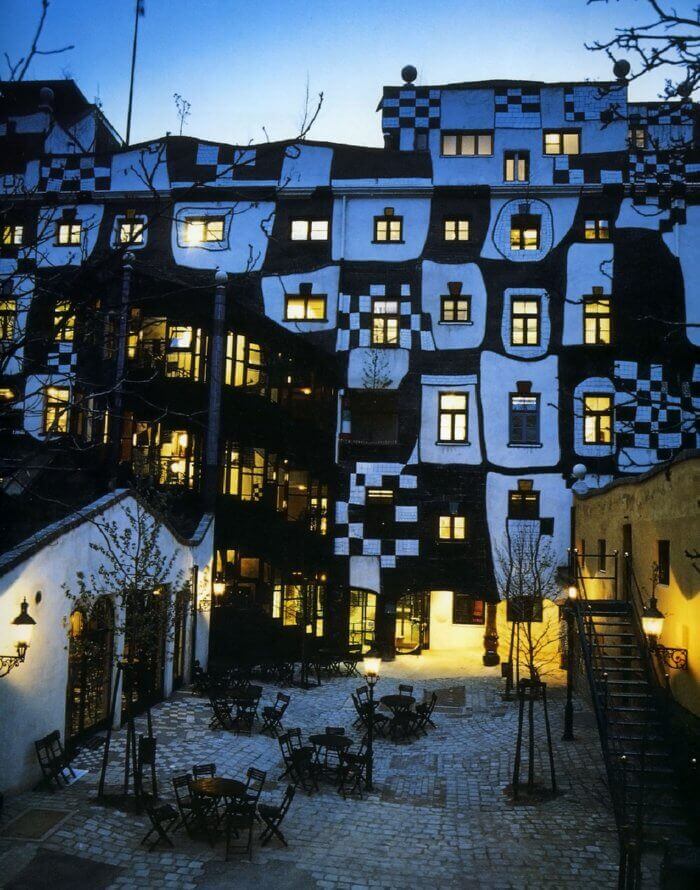
Hundertwasser- KunstHaus, Wien, 1989-91. hundertwasser.at Note the uneven floor- “an uneven floor is a melody to the feet.”
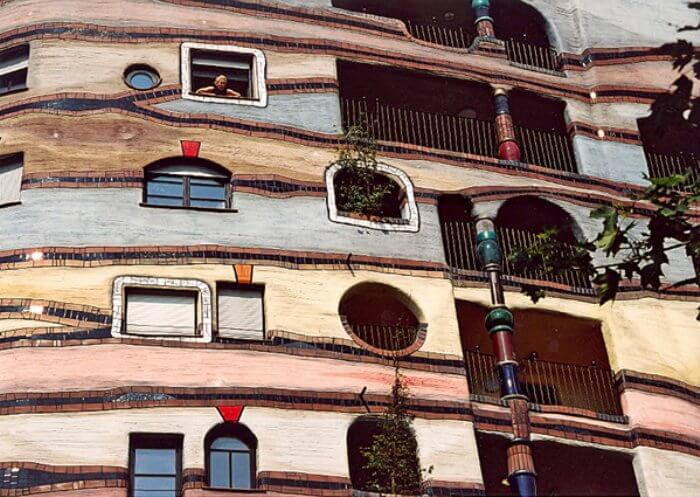
Hundertwasser- Forest Spiral of Darmstadt, 1998-2000. hundertwasser.at
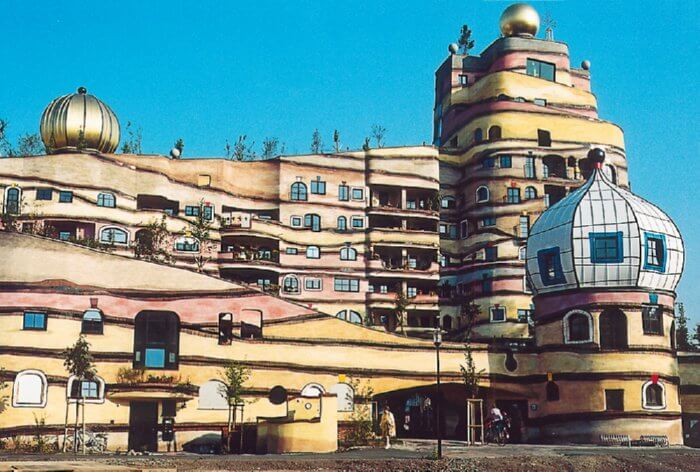
Hundertwasser- Forest Spiral of Darmstadt, 1998-2000, 105 residential units. hundertwasser.at “Just carrying a ruler with you in your pocket should be forbidden, at least on a moral basis. The ruler is the symbol of the new illiteracy. The ruler is the symptom of the new disease, disintegration of our civilisation.”
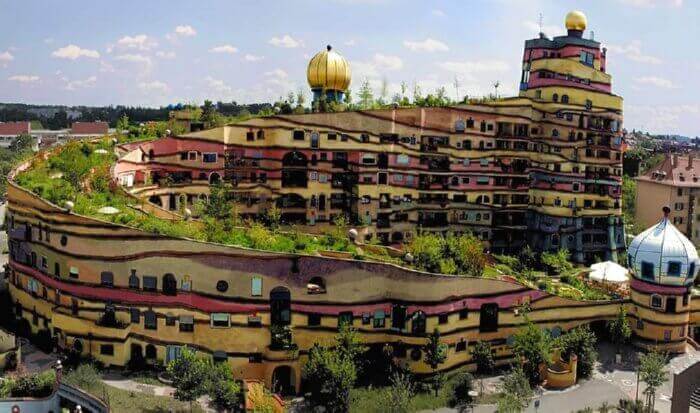
Hundertwasser- Green Roofed Forest Spiral of Darmstadt, 1998-2000. hundertwasser.at
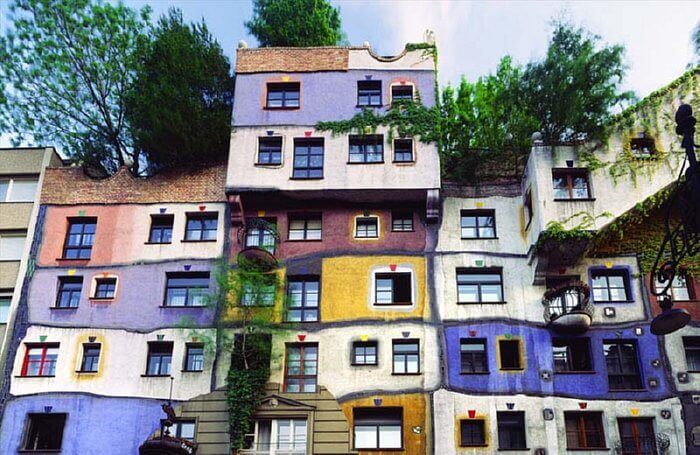
Hundertwasser- Hundertwasser Haus, Vienna, 1983-86. hundertwasser.at Note the tree growing out of window. He published a manifesto; ‘Your window right – your tree duty‘ “A journey into the land of creative architecture where there are window rights and tree tenants and uncontrolled irregularities; uneven floors, woodlands on the roof, spontaneous vegetation and barriers of beauty…” Hundertwasser believed all tenants should have the right to reach out their window and paint their space as they wish.
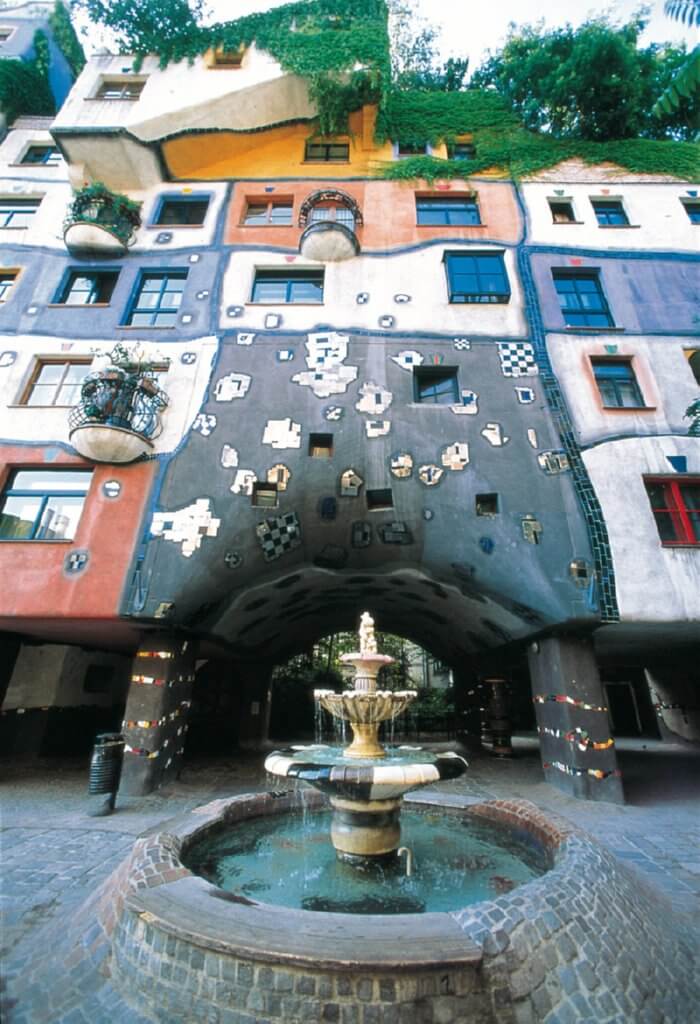
Hundertwasser- Hundertwasser Haus, Vienna, 1983-86. hundertwasser.at
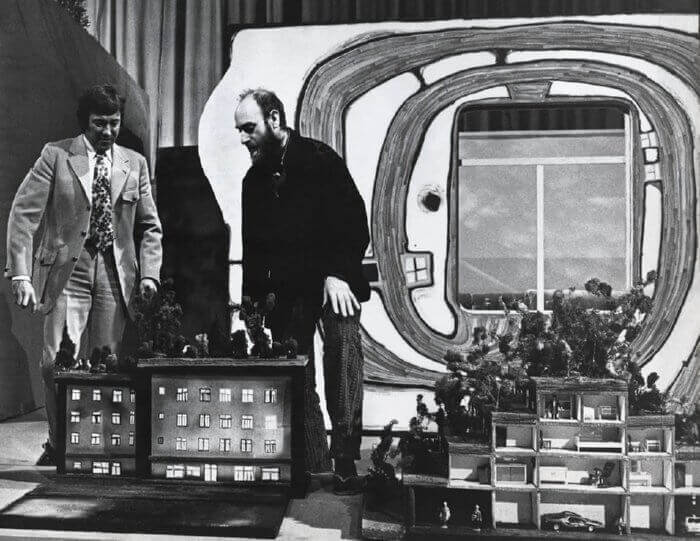
Hundertwasser on the Eurovision programme ‘Make a Wish’ with Dietmar Schönherr, Dusseldorf, 1972, explaining green roofs. hundertwasser.at
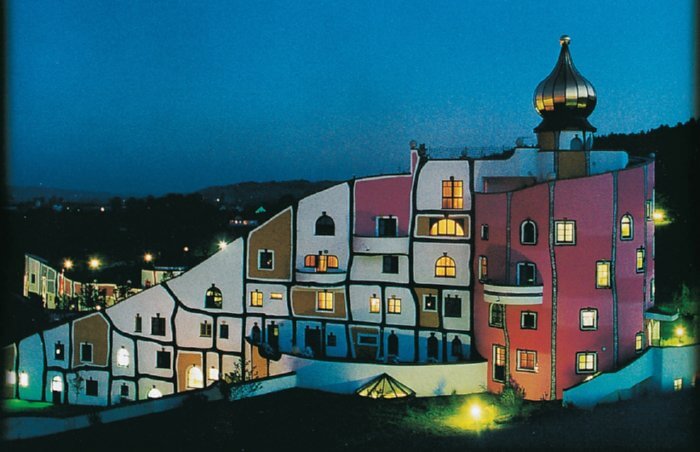
Hundertwasser- Thermal Village, Blumau, Austria, 1993-97. hundertwasser.at
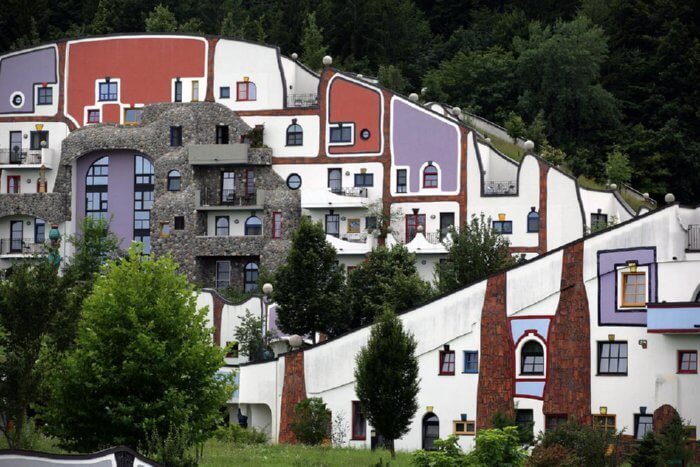
Hundertwasser- Thermal Village, Blumau, Austria, 1993-97. hundertwasser.at
For a visit to this green eco-lodge- blumau.com
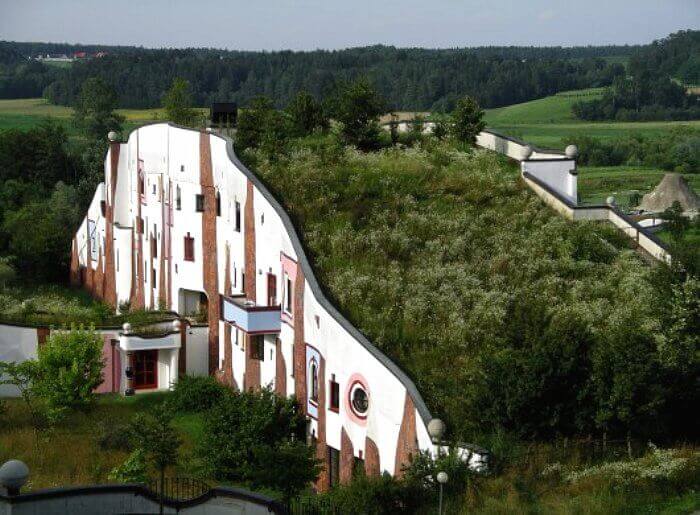
Hundertwasser- Thermal Village, Blumau, Austria, 1993-97. hundertwasser.at Compost toilets fertilize the green roof, closing the waste cycle. “Man must take care that the cycle functions.”
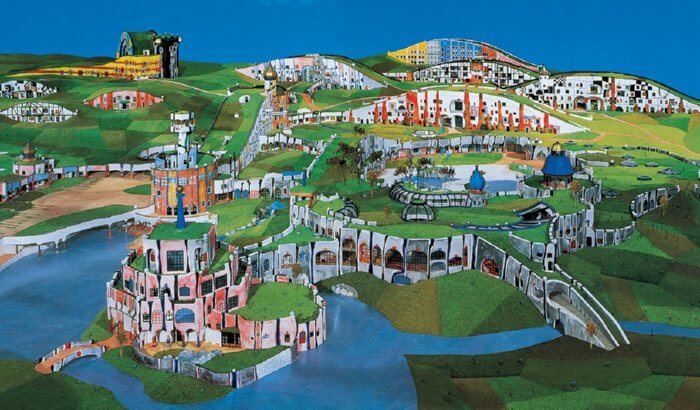
Hundertwasser- Model for above Thermal Village, Blumau. hundertwasser.at
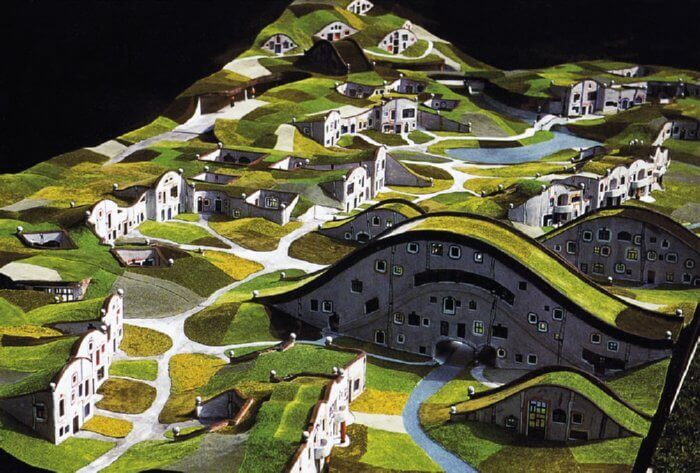
In the Meadow Hills, model, 1989. hundertwasser.at
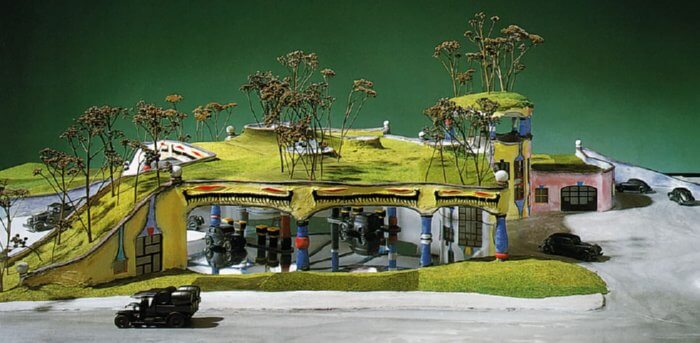
Hundertwasser- Agip Service Station, model, 1989. hundertwasser.at
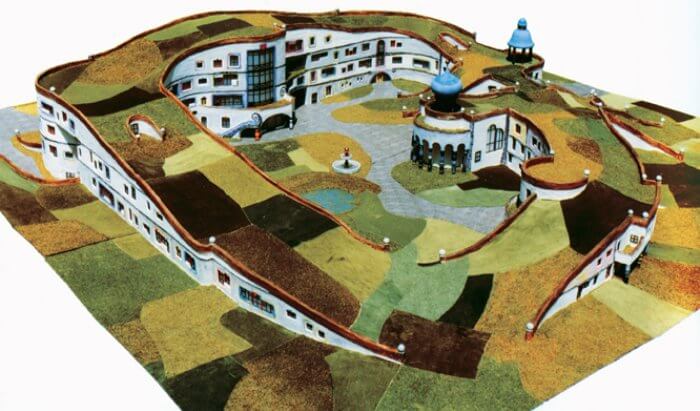
Model for Heddernheim Integrative School, Frankfurt. hundertwasser.at
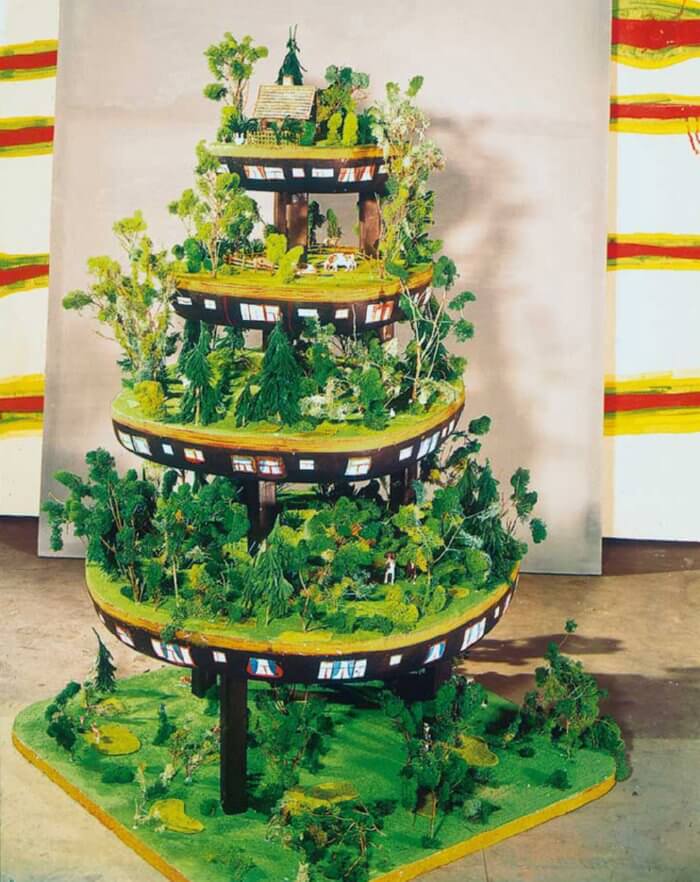
Hundertwasser Model- Houses Under Meadows. hundertwasser.at
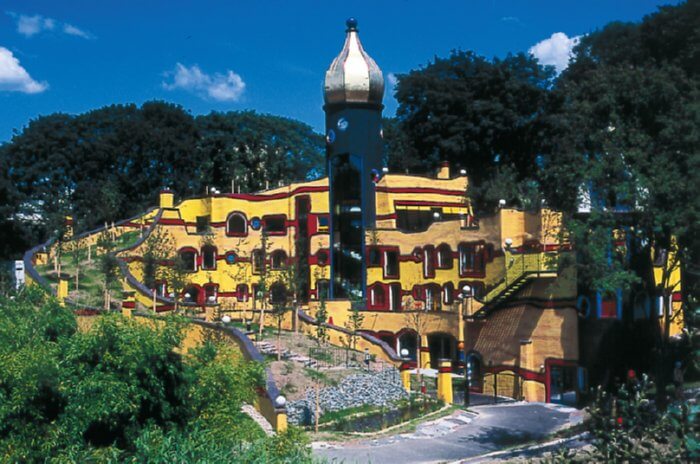
Ronald McDonald House, Essen, Germany, 2004-05. hundertwasser.at
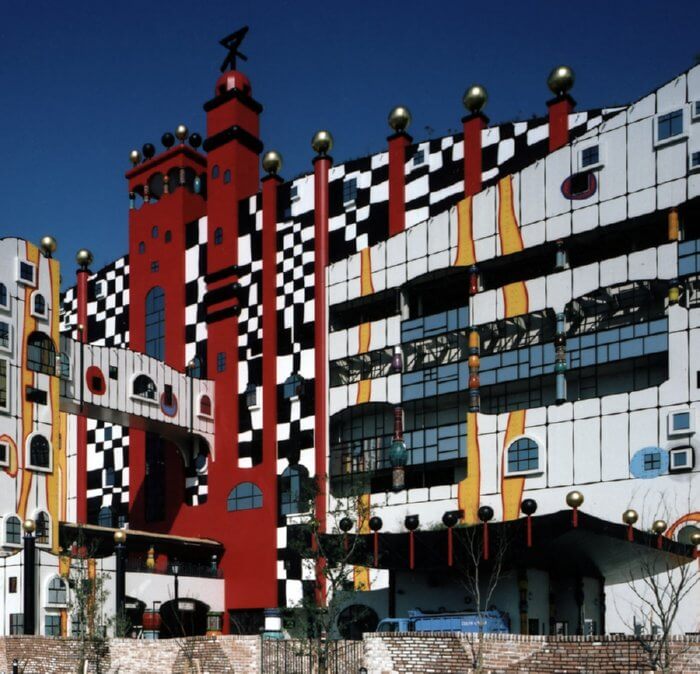
Hundertwasser- Maishima Incineration Plant, Osaka, Japan, 1997-2001. hundertwasser.at
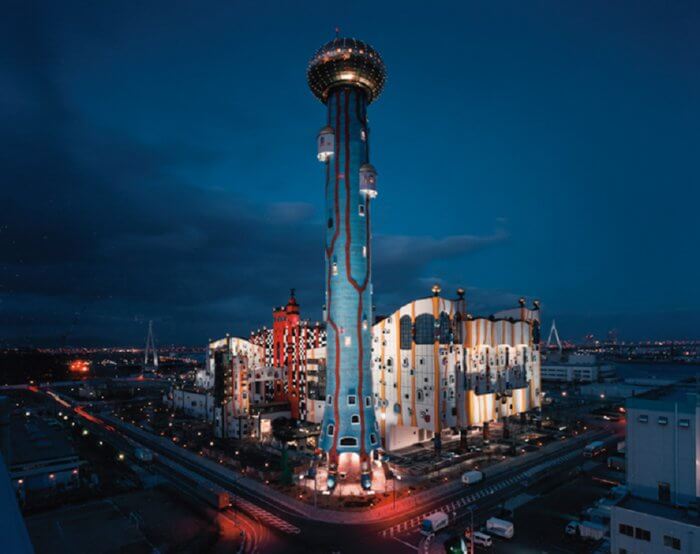
Hundertwasser- Maishima Incineration Plant, Osaka, Japan, 1997-2001. hundertwasser.at
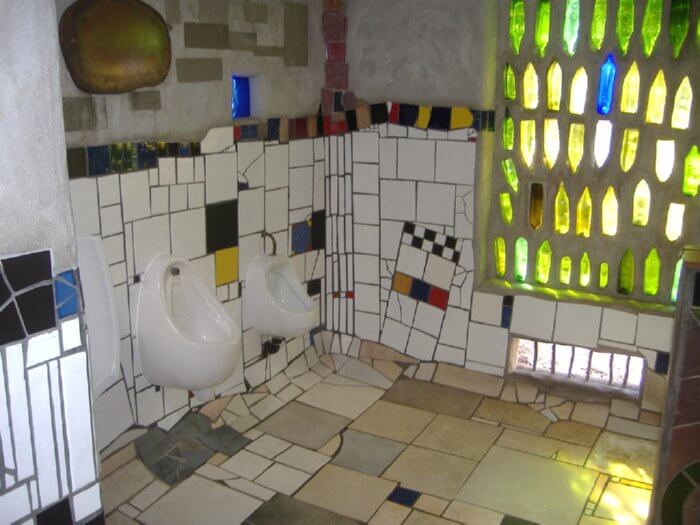
Hundertwasser- Kawakawa Public Toilets, New Zealand, 1999. hundertwasser.at Hundertwasser often built uneven floors. He felt a flat floor was built for machines and was never meant for people. Photo: Mike Steadman flickr.com
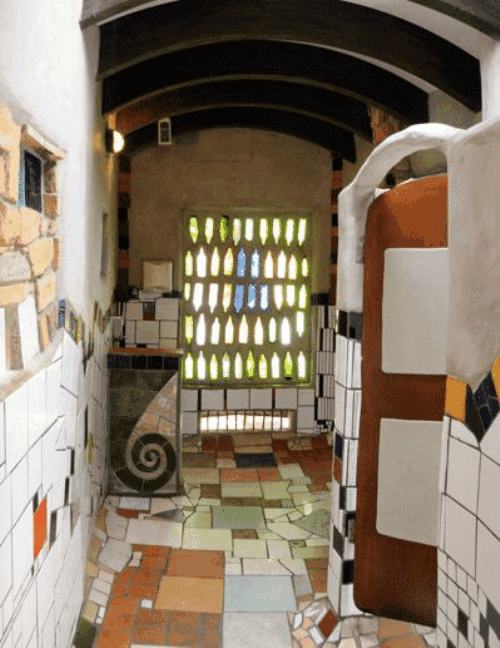 Hundertwasser- Kawakawa Public Toilets, New Zealand, 1999. hundertwasser.at
Who Was Hundertwasser?
Artist & architect Friedrich Stowasser (1928 – 2000) changed his name to Friedensreich Regentag Dunkelbunt Hundertwasser which roughly translates as ‘Peace-rich or Peaceful, Rainy day, Darkly multicolored, Hundred water.’ Hundertwasser had an Austrian Catholic father who died when he was a small child and a Jewish mother. He and his mother escaped the fate of much of her family by posing as Catholics.
He traveled extensively as a young man and enrolled at the Ecole des Beaux Arts, Paris, but left after a day. For years he lived, traveled the world, and painted on a reconstructed salt hauler sailboat which he called the “Regentag” (rainy day). He also owned a farm cottage in northern France and a cabin in New Zealand. Hundertwasser felt a special connection to New Zealand, and was buried there when he died in the year 2000.
“When man thinks he has to correct nature, it is an irreparable mistake every time. A community should not consider it an honour how much spontaneous vegetation it destroys; it should rather be a point of honour for every community to protect as much of its natural landscape as possible. The brook, the river, the swamp, the riverside wetlands as they are, the way God created them, must be sacred and inviolable to us. Correcting a stream only has evil effects, which are expensive in the end: the lowering of water tables, the destruction of forests, the transformation of large areas into steppes, no regeneration of the water, which runs off too fast. The river wetlands can no longer fulfill their sponge-like function: the absorption of excess water and slow feedback in dry spells, like a good piggy bank in times of emergency. The regulated brook becomes a sewer. Fish die, and there are no fish in the brook because they cannot swim through the regulated channel. Floods, with all their devastating consequences, all the more after regulation. Because too much water runs off too quickly, converging in great quantity without any chance of being absorbed by the earth and the vegetation. Only a stream with a high waterline flowing irregularly can produce pure water, regulate the water household and conserve the fish and animal populations to the benefit of man and his agriculture. Now, almost too late, this age-old adage is being recognised and the courses of rivers and streams, which had been straightened in concrete channels, are being destroyed in order to restore the previous irregular state. What irony! So why regulate a stream if you have to deregulate it afterwards?”
Hundertwasser, May, 1990
hundertwasser.at
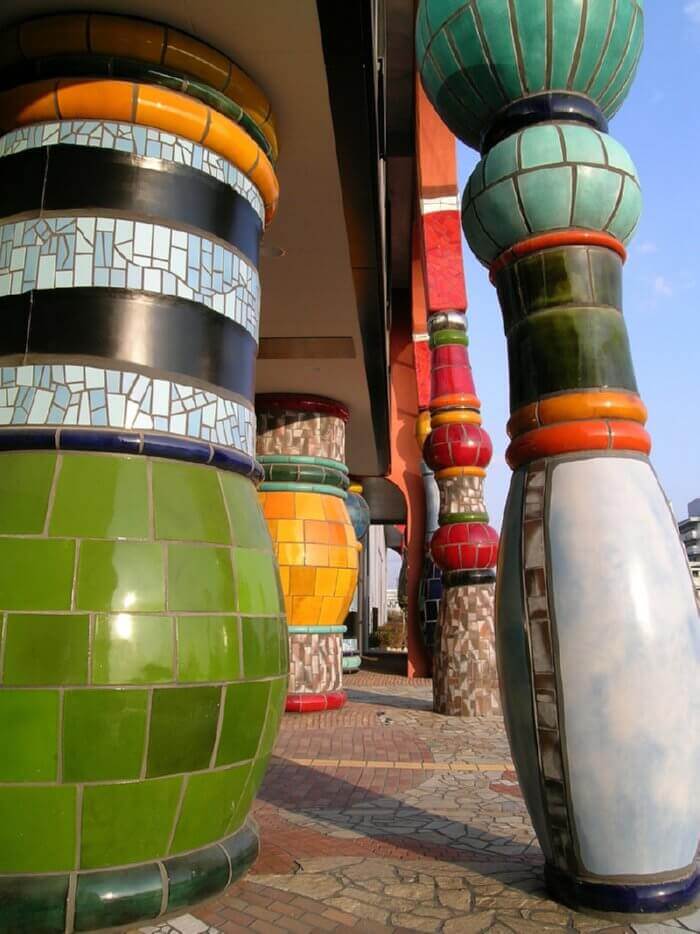
Maishima Sludge Plant. hundertwasser.at
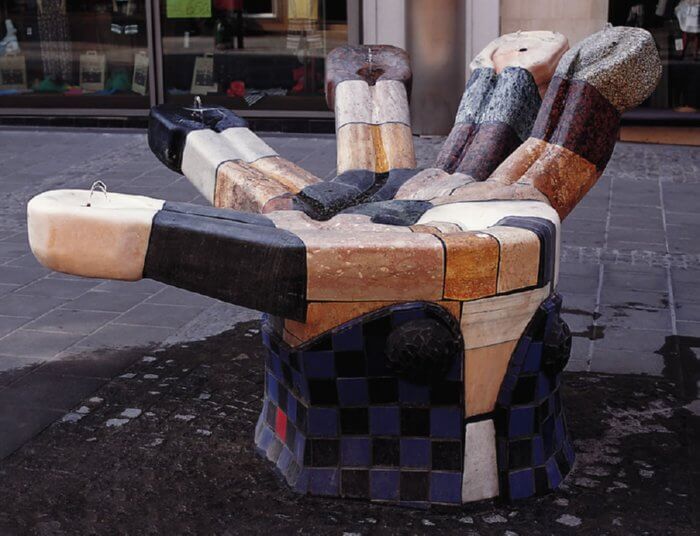
Spiral-River Hand Drinking Fountain, Linz, Austria, 1993/94. www.hundertwasser.at
More Information About Hundertwasser
- Biography: hundertwasser.at
- List of Buildings by Hundertwasser: en.wikipedia.org
Best Books About Hundertwasser
- Friedensreich Hundertwasser 1928-2000 by Wieland Schmied
- Hundertwasser: Complete Graphic Work 1951-1976 by Wieland Schemed
- Hundertwasser: Architecture, edited by Angelika Taschen
- Hundertwasser for Kids: Harvesting Dreams by Barbara Stiff
If we do not honor our past
we lose our future.
If we destroy our roots
we cannot grow.—Hundertwasser




















Beautiful green building images, thanks for sharing!
Love it; do you know where I can find the documentary in its entirety?
It appears there were three documentary films made about Hundertwasser’s life, both the 1966 and 1998 films by Ferry Redax. The more well known documentary short: “Hunderwassers Regentag” (“Hunderwasser’s Rainy Day) of 1972, directed by Peter Schamoni. I am afraid I cannot find a way to view it. Here is the FB page for the movie though: https://www.facebook.com/pages/Hundertwassers-Rainy-Day/124331877653551
Thanks for the amazing video
TOO MANY COLORS….
!!!!
Meow
TOO MANY COLORS….
!!!! REALLY!
Friedensreich Hundertwasser Architecture
The father of the Green Roof…
Born in Austria 1928, died at Sea 2000.
IS IT POSSIBLE TO GET SOME COPYRIGHT FREE IMAGES FOR MY BOOK ON GREEN ARCHITECTURE.
REGARDS
SAMAR CHANDRA
For any authorizations,
Please contact:
THE HUNDERTWASSER NON-PROFIT FOUNDATION
Colloredogasse 32
1180 Vienna
Austria
T +43 (0)1 470 12 12
F +43 (0)1 470 90 90
E office[at]harel.at
hundertwasser.at/english/kontakt.php
Very nice