
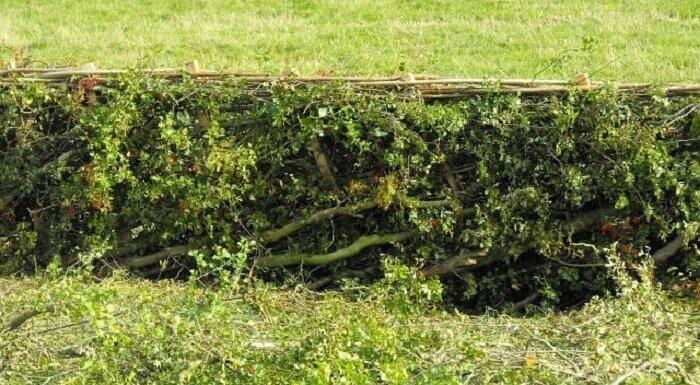
Over two thousand years older than chain link. A living hedge not only keeps livestock fenced but also prevents soil erosion and water runoff. Living hedges are good wind blocks and snow collectors as well as habitat to birds, insects and small mammals. And they sequester carbon, rather than produce it, such as during the manufacture of chain link or plastic.
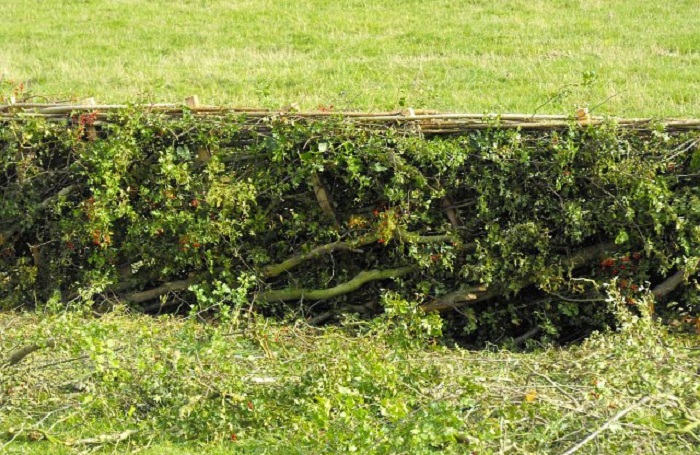
A hedge with summer foliage. Photo by Penny Mayes. www.geograph.org.uk
Maintaining A Hedge
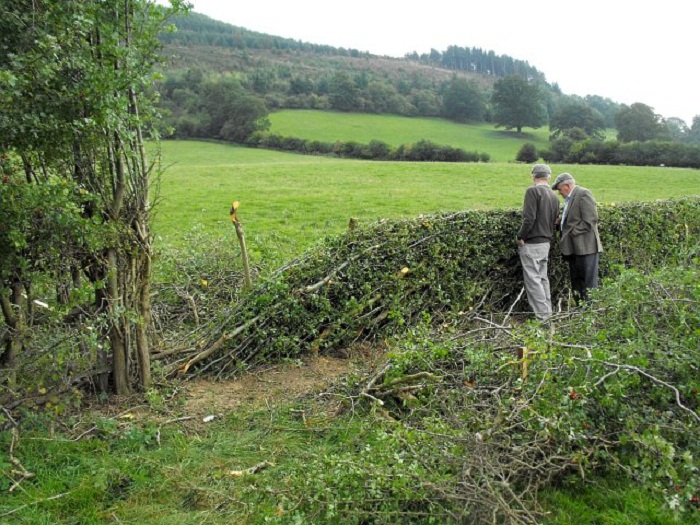
Inspecting a hedge. A laid hedge trimmed too square and perfect may look nice but limits biodiversity, although periodic tidying is necessary. Trimming yearly eliminates flowers and berries and insects and birds. You can get some idea of the height of the hedge before work began from the taller hawthorns on the left. Photo by: Penny Mayes. www.geograph.org.uk
How Hedges Grow

The stem of the tree or bush is partially cut at its base at an angle. The art is in knowing how much to cut through the stem while keeping life in the remaining connected piece but allowing the flexibility needed to bend the trunk 35 to 60 degrees without breaking. These remaining stems or trunks are now known as pleachers. The angled trunk stump is cut off straight to prevent disease and promote new vertical growth. Image: www.gerbeaud.com
How To Lay A Hedge
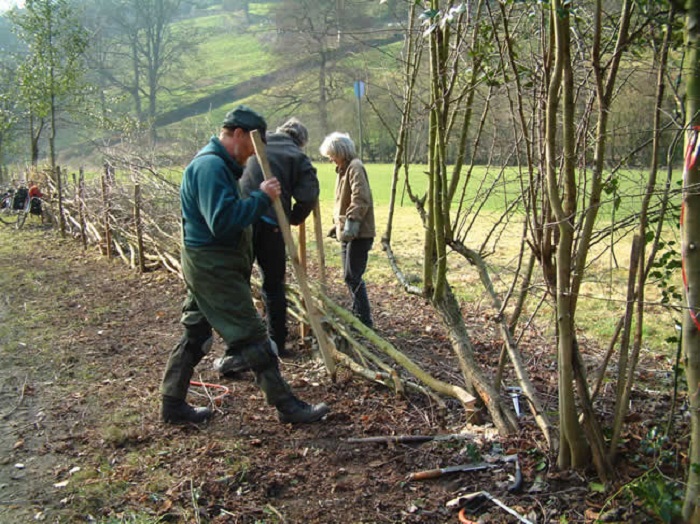
Hedge laying is always performed during the late fall or during winter months while “the sap is down”. The pleached trunk may not be brought down perfectly horizontal as sap only flows upward. Image: a hedgelaying competition in Penyffordd. penyffordd-district.blogspot.com
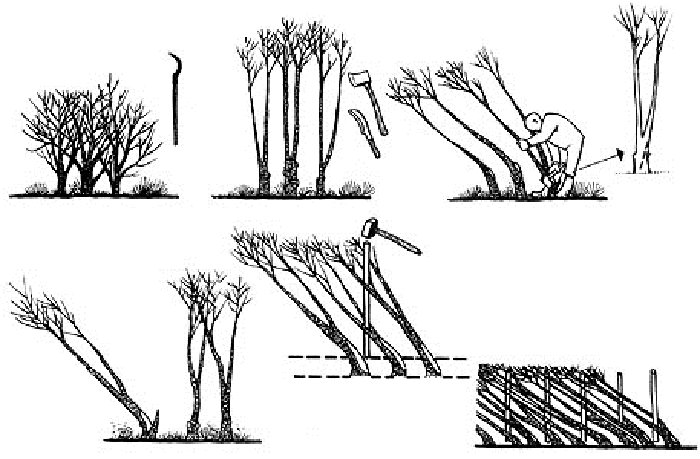
The trees must be at least 8 feet tall before a hedge can be laid and ideally about nine inches apart. The first step is to trim the underbrush so that the pleached stems will receive air and light, and new growth crops up from the cut trunks. After pleaching, additional stakes are driven into the hedge for added support. Drawing: www.hedges.educagri.fr
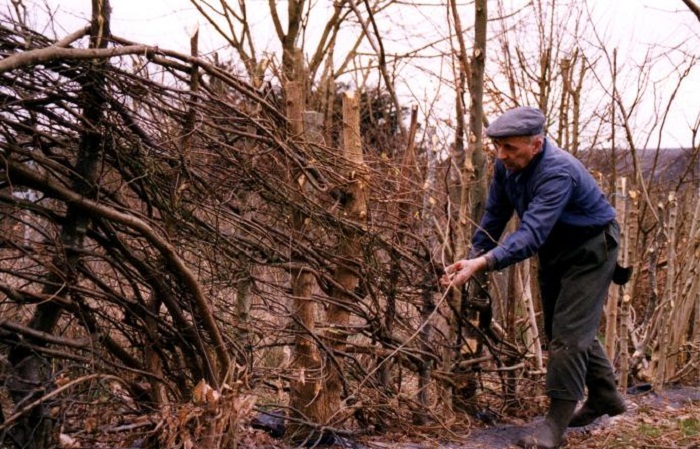
Intertwining the branches through the vertical posts and tree trunks ensures a cow- and sheep-proof barrier. In the olden days in Europe, every landowner knew how to lay a hedge. Image: www.maisonbotanique.com
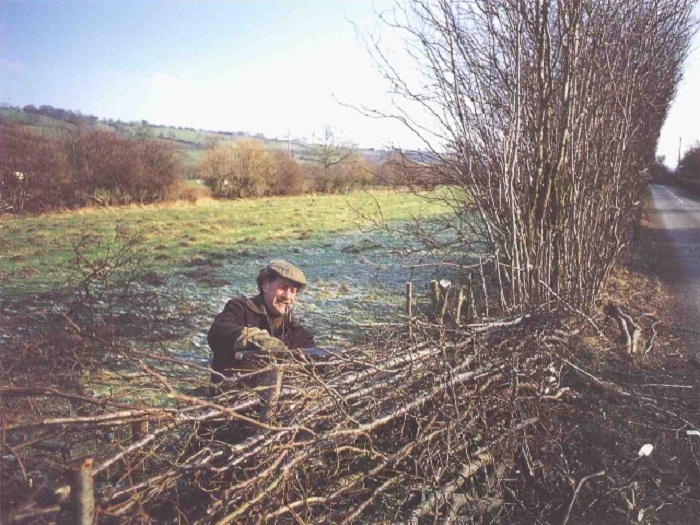
In the UK and Ireland, hawthorn, blackthorn and hazel are popular trees for hedge laying. Diversity of species within the hedge is best for ensuring longevity and attracting biodiversity. In 1946 there were an estimated 500,000 miles of hedge in England. Since then, there has been a rapid loss of hedgerow, mainly due to changes in agricultural practices. Of late, the art of hedge laying is being revived as the benefits and beauty of the hedgerows are again finding favor.

Hedgerow surrounds a road at Duchy Home Farm. The Prince of Wales laid part of this hedge. This stand of trees was ten years old. Ancient laid hedges were created from the trees and shrubs that remained at the edges of a cleared field; more recently the trees and shrubs are planted intentionally. Image: www.duchyoriginals.com
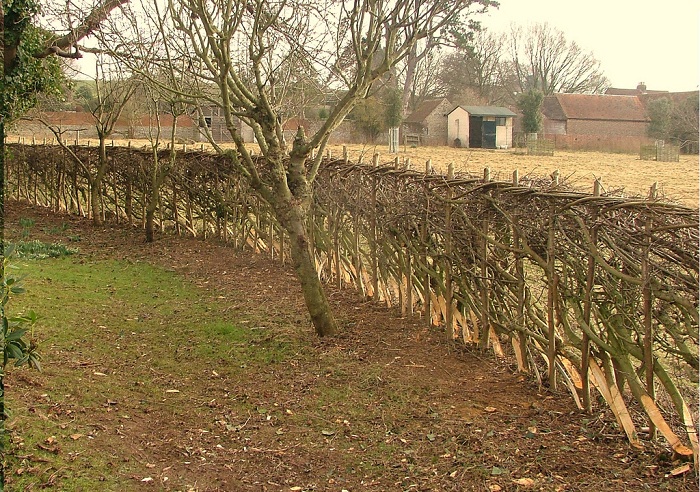
A laid hedge of hawthorn. Photo by: Mark and Rebecca Ford Art Sculpture. www.twocirclesdesign.co.uk
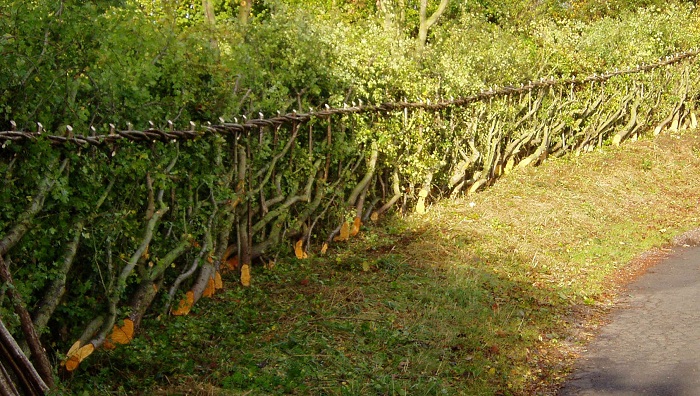
With summer foliage in Staffordshire. There are numerous different styles of laid hedge. See resources below. The style shown here lays the branches into the field or toward the livestock. Image: www.shropshirehedgelaying.co.uk

Many styles add a top binding (sometimes called hethers) which consists of weaving a bunch of long (3-4 meters), thin, pliable branches along the top of the stakes to keep the hedge connected and strong. Willow and hazel are good candidates for binders. Both stakes and binders will rot over time, but the hedge will be dense enough to support itself by then. ImageL www.maison-deco.com
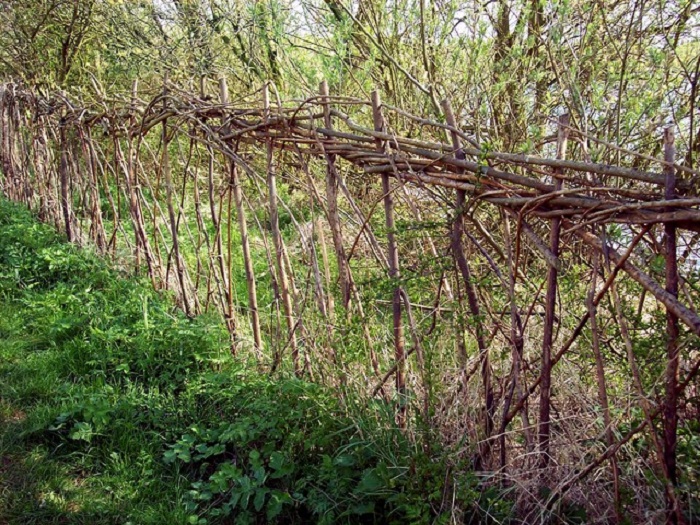
The bindings and posts add stability until the fence grows in. Image: gallery.nen.gov.uk
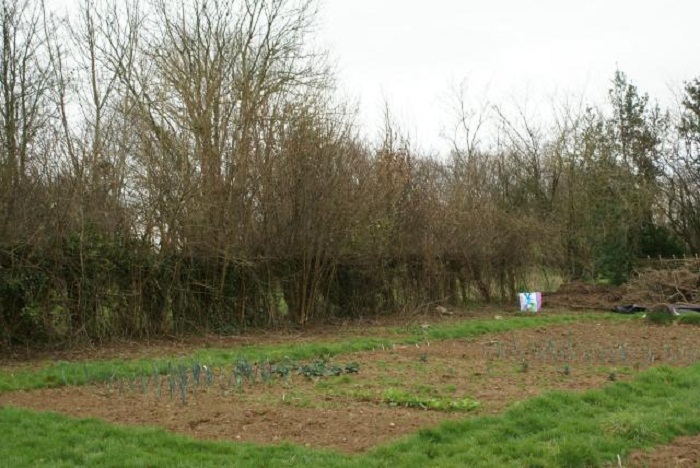
Before the hedge laying, a Friday morning in March. forum.downsizer.net
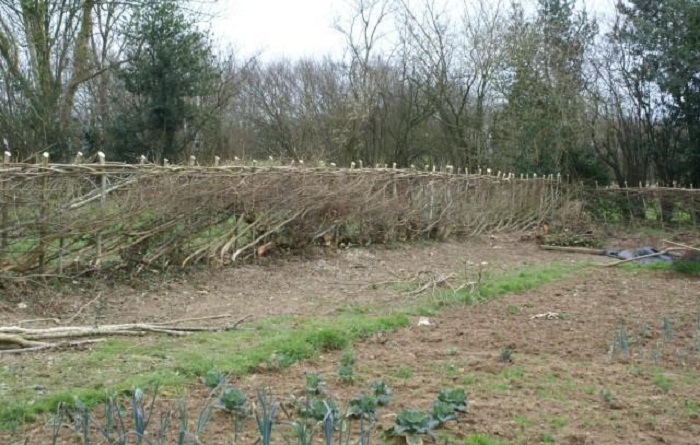
Hedge laid by Saturday afternoon with a few helping hands. forum.downsizer.net
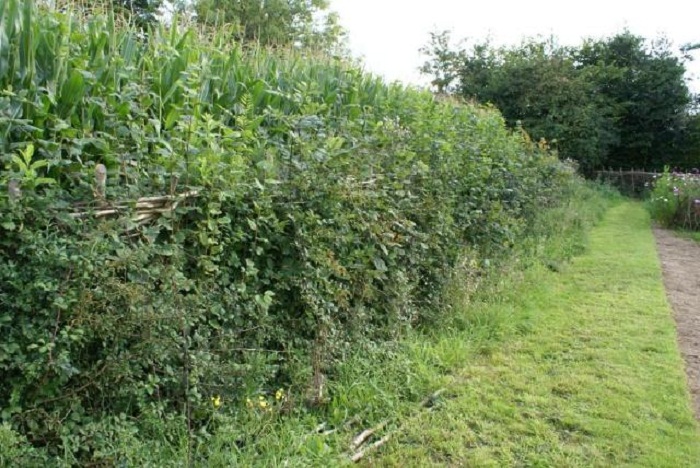
The same hedge in late summer of the same year. forum.downsizer.net
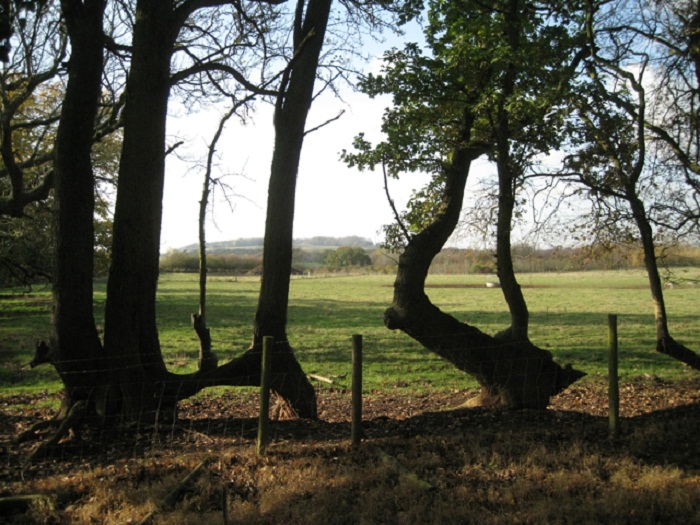
What you would eventually get if you never relaid your hedge. Photo by Robin Stott. www.geograph.org.uk
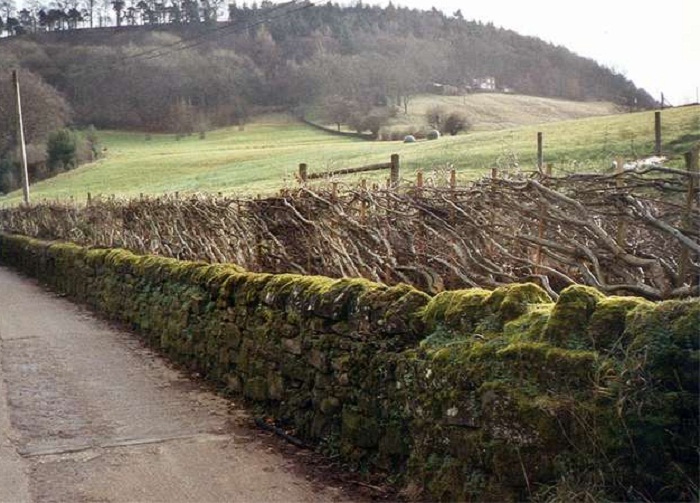
Derbyshire style with stakes only, no top bindings. www.peaktraditionalfencing.co.uk

Large unruly hedges can be brought under control creating more space and allowing in more light. www.peaktraditionalfencing.co.uk
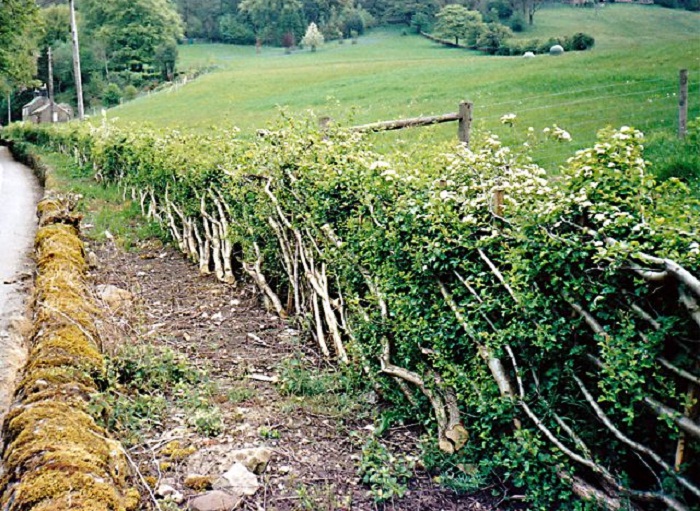
This hedge was laid in the winter, and this is its first spring growth. www.peaktraditionalfencing.co.uk
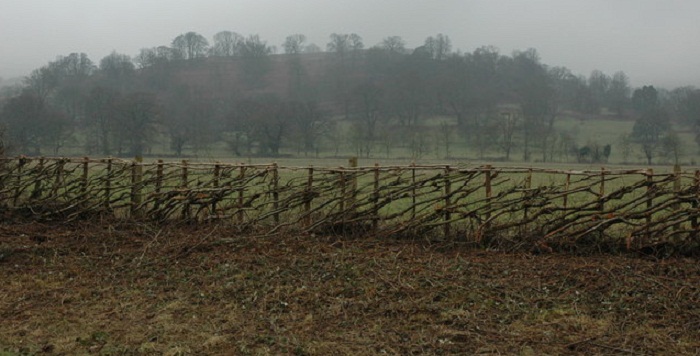
Laid hedge at Elmley Castle. Photo by Philip Halling, www.geograph.org.uk
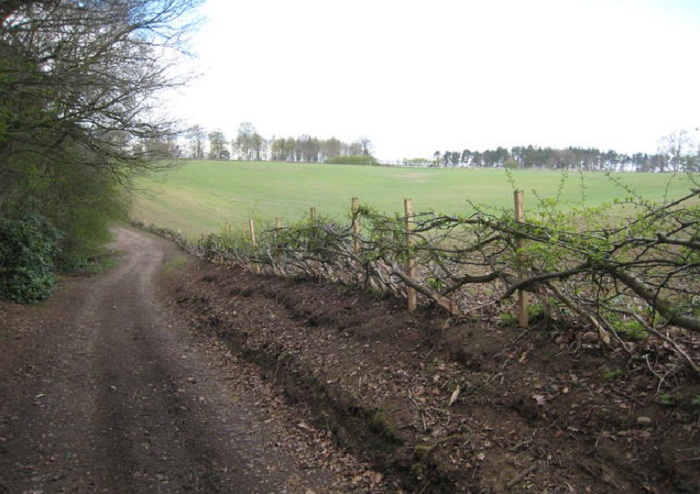
New growth from ground level rejuvenates the hedge. A relaying of the hedge should take place every 20-50 years. This hedge is Derbyshire style. Photo by David Stowell. www.geograph.org.uk
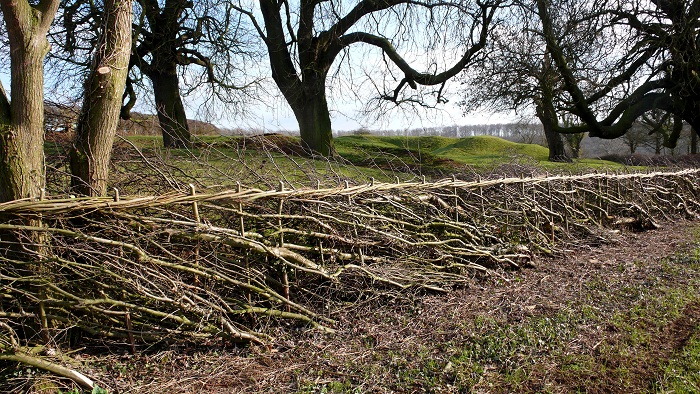
Laid hedge in Gloucestershire. ladymuckdigs.blogspot.com

A stretch of newly laid traditional hedging near Middleton, Northamptonshire. Image: Picapica.
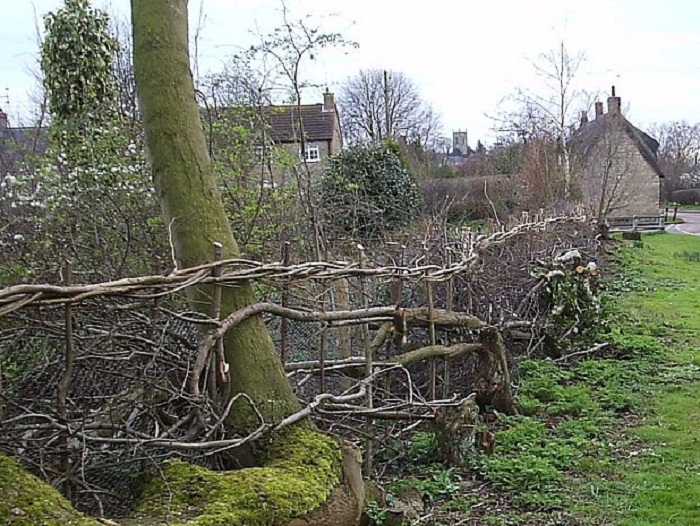
A newly laid hedge in Grendon, Northamptonshire. Image by R. Neil Marshman. en.wikipedia.org
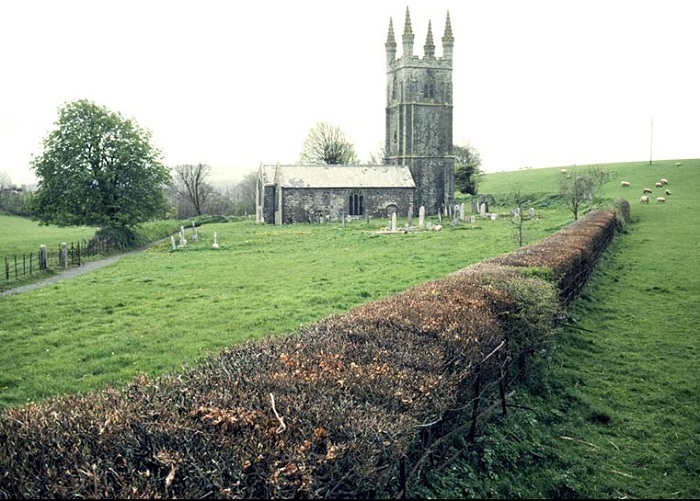
A wide ancient hedge. “In southern England alone, perhaps as many as one-fifth of all surviving hedgerows date from Saxon times, a living link with the Dark Ages. Some even date back to Roman times.” Photo by Sam Abell. photography.nationalgeographic.com
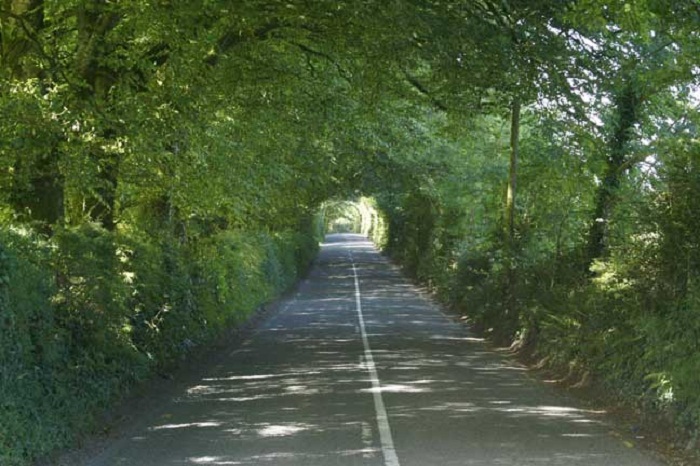
An overgrown hedgerow interspersed with trees in Ireland. Image by Michael Fairchild. www.michaelfairchild.com
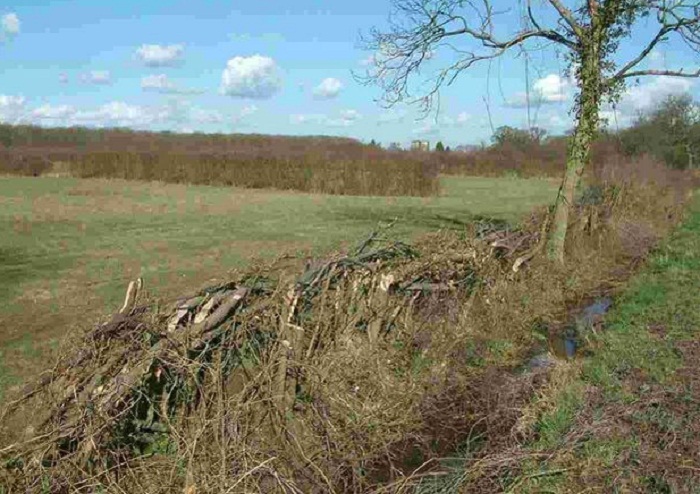
With periodic trimming to encourage regrowth and relaying every 15 to 50 years, a hedge can last indefinitely. This ancient hedgerow called Judith’s Hedge is in Monks Wood. Judith was the niece of William the Conqueror and owned Monks Wood (then known as Ewingswode) in 1086. The hedge itself is thought to be over 900 years old. Photo by Chris Gardiner. www.geolocation.ws
Caesar described the process of hedgelaying in 57 BC in his Gallic War after encountering laid hedges at Nervii in Flanders.*
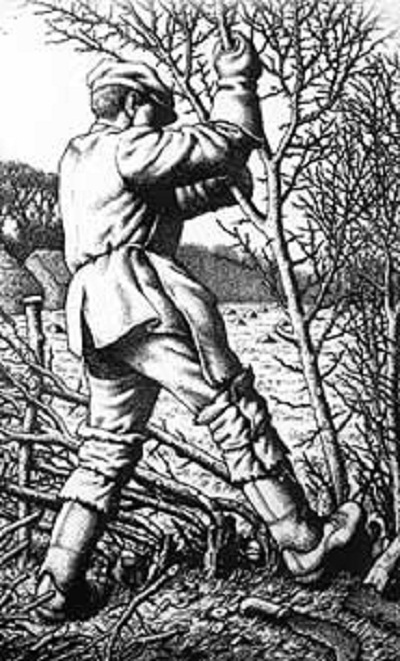
The leather gauntlets which were worn to lay hedge were called “dannocks”.
Trees & Shrubs That Are Good For Hedging
Hawthorne, Blackthorn, Hazel, Elm, Ash, Field Maple, Beech, Plum, Crab Apple, Holly, Primrose, Sweet Chestnut, Beech, Hornbeam, Whitebeam, Wild privet, Spindle, Balm-leaved Figwort, Bastard Balm, Campions, Cranesbills and Vetches.
Native is best for wildlife diversity.
For more species see: www.hedgerows.co.uk
Bulk trees for sale in UK: www.lowimpact.org
Books About Laying Hedges
Hedges and Hedgelaying: A Guide to Planting, Management and Conservation by Murray Maclean
Hedge Laying Resources
National Hedgelaying Society
The English Hedgerow Trust: www.hedgerows.co.uk
HedgeLink: www.hedgelink.org.uk
Study: Hedgerows enhance beneficial insects on farms in California’s Central Valley
Read about the different styles of hedges: www.hedgelayer.freeserve.co.uk
“The shrinkage in the flora is due to a combination of clean-farming, woodlot grazing, and good roads. Each of these necessary changes of course requires a larger reduction in the acreage available for wild plants, but none of them requires, or benefits by, the erasure of species from whole farms, townships, or counties. There are idle spots on every farm, and every highway is bordered by an idle strip as long as it is; keep cow, plow, and mower out of these idle spots, and the full native flora, plus dozens of interesting stowaways from foreign parts, could be part of the normal environment of every citizen.”
Aldo Leopold, A Sand County Almanac

























we are small communities doing permaculture in kenya and we also need somebody to help put our project in web site and we preschool for orphan which doing permaculture and the communities in odienya kenya please let as know your programs
best wishes George otieno ouma
I’m curious to know why in most cases all the plants are only going in one direction. wouldn’t it make sense to alternate the directions to result in a cross-hatch weave pattern?
If the hedge is on a slope the stems pointing down hill will die. You always lay up hill.
From a purely implementation standpoint, crosslaying would get very frustrating trying to fight all that woody material. You’d end up with brush on top of the piec you’re trying to cut and it would be a nightmare
Great question.
Maybe gaps in the trees would create a few too many open areas, if they were cross hatched?
I have never laid a hedge so do not have first hand knowledge. I am sure someone with experience would be better suited to answer your question. Hopefully an experienced hedge layer will post an answer!
Enjoyed British/Scotch/Irish hedgerows and how to build them very much. I live in somewhat dry California and am wondering just what trees/bushes might work best for me.
Donald
Donald, did you get a reply to your inquiry? I too in in CA and revisiting hedgerows. I found tht my surname is a reference to the people who live near the hedges, Hays, Hayes, Haight and the like.
Reply to Donald Beck
I live in Walnut Creek, CA and have 4 hawthorne trees ca. 60 yrs old and a new one coming up. Three are watered, two aren’t. They tolerate the dry summer quite well and you get so many berries in the fall that you can accumulate them quickly. But they are VERY slow growers.
Thanks, I am in Lafayette and was thinking the hawthorne would be a good candidate. Exploring others too.
If the image you have stolen is not removed immediately I will be forced to take legal action.
Mr.Alport,
I am sorry you are so upset. I always try to credit image sources correctly, but sometimes it is difficult to find the original source. Many people/companies appreciate the link to their site for potential business.
Please tell me which image is yours and I will immediately take it off or correct the image credit to link to you. I am clueless as to which is yours.
Thank you, Keiren
Hello Keiren, having reviewed the photo I can see that you have given credit to the owners. I apologize for any concern I may of caused.
Russell
Having just read the comments following the article I have to say it’s a pity Mr Alport’s apology wasn’t as strong as his original threat.
Agree!
I’m surprised to see primroses, figwort, balm, campions, cranesbills & vetches listed as suitable for hedging…..???
Hello Russel Alport,
You are a turd.
I am sorry,
Anon
Very helpful site, great to have so many pictures to refer to to – we are about to lay a mixed native hedge planted 8 years ago and it’s good to see the variety of trunk sizes. Many thanks.
I just read your article on hedge laying and I wanted to thank you for sharing this with the world. It’s really good!