
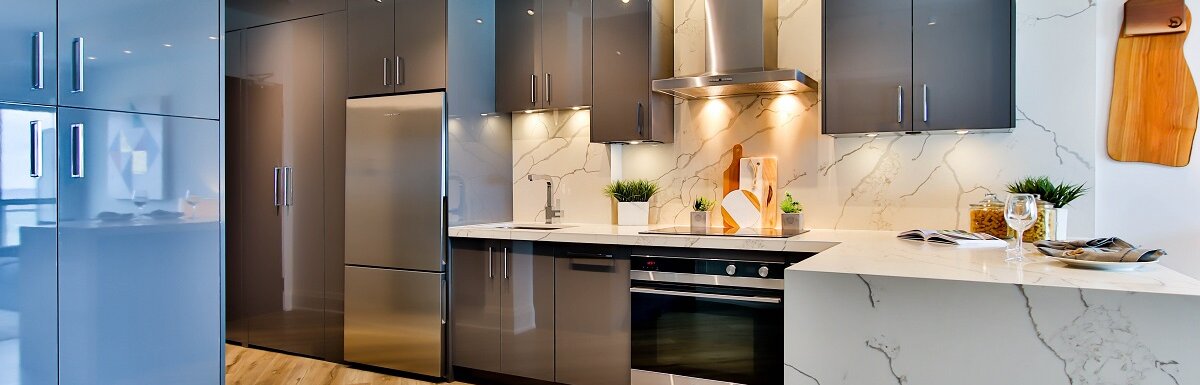
What will kitchens look like in 30 years? Likely, they’ll need to be much more energy-efficient and take up less space. Like these!
Dishwasher Under The Sink Drain
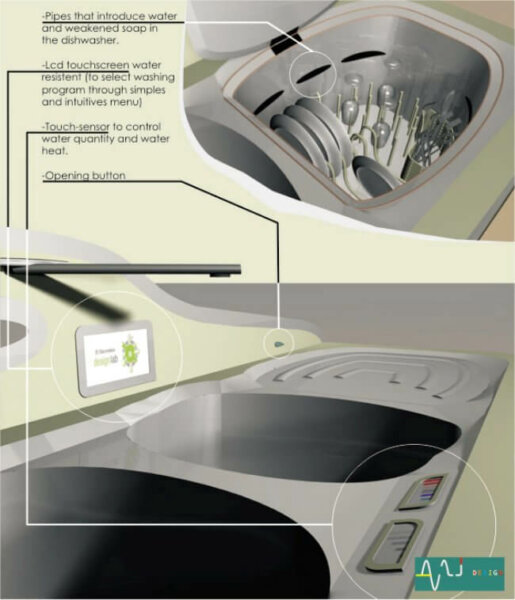
Dishwasher under the sink drainer by Cristiano Giuggiol. Good idea! The washing cycle takes only 6 minutes and uses 23 litres of water.
www.coroflot.com
The Kitchen Hideaway
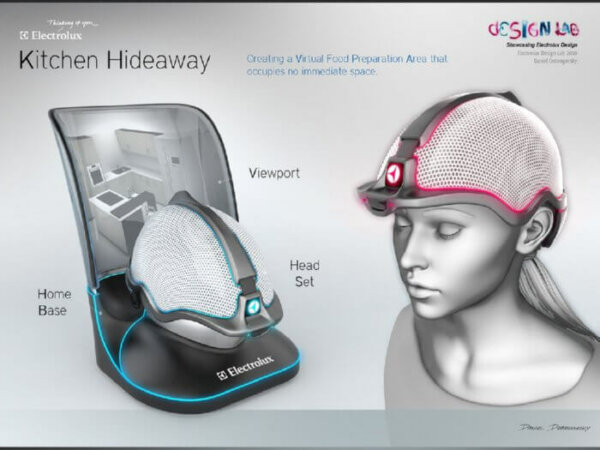
A virtual reality concept, The Kitchen Hideaway allows the inhabitants of a communal building to imagine being in a kitchen, preparing a particular meal rather than having to actually do this for themselves. The thoughts of the user are then transmitted to robotic chefs within the building who then prepare the visualized meal in a real kitchen and with real ingredients. In effect, the headset replaces the need for kitchen appliances in individual dwellings, saving space through creative thinking. Design by Daniel Dobrogorsky, Australia.
The Snail: Micro Induction Heating
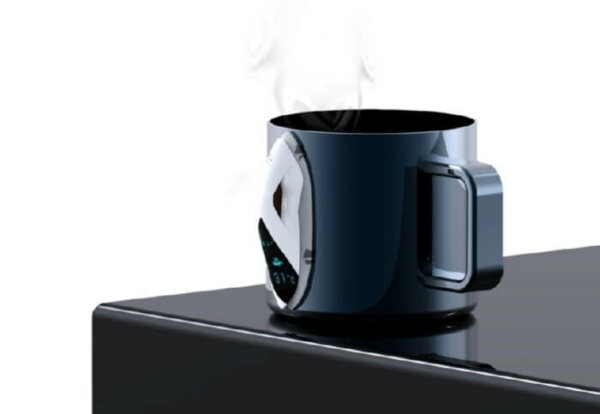
A portable heating and cooking device based on magnetic induction processes. Such is the size and versatility of the Snail, it can be stuck directly on to a pot, a pan, a mug etc. to heat the contents. This reduces the amount of space required for conventional cooking whilst adding portability to the process. Powered by a high density sugar crystal battery, the Snail converts the energy from the sugar, heating up a coil to conduct the magnetic induction process to the utensil. Inbuilt sensors detect the food type being heated so as to automatically adjust the time and temperature. A simple touch sensitive display with interface helps to monitor the process. Design by Peter Alwin, India.
GAIA: Wall Mounted Air Purification
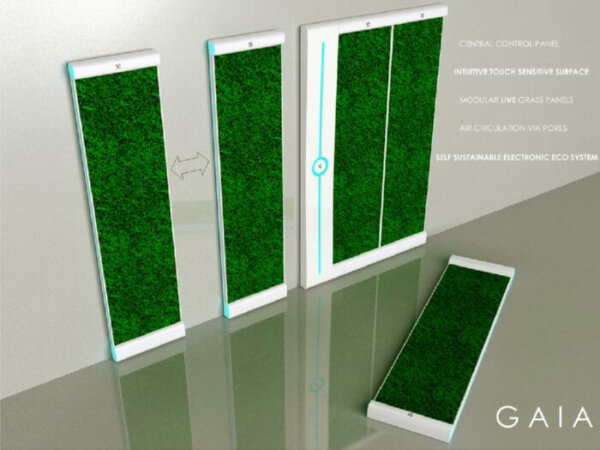
A self sustaining, wall mounted ‘personal ecosystem’ that creates energy from a living wall of plants providing air circulation, air purification and temperature control abilities. Envisaged as a personal touch of green, the wall units are modular, so they can be fitted in to homes and apartments of different sizes as required to provide individualized clean air while taking a minimum of space. Design by Ankit Kumar, India
Bio Robot Refrigerator
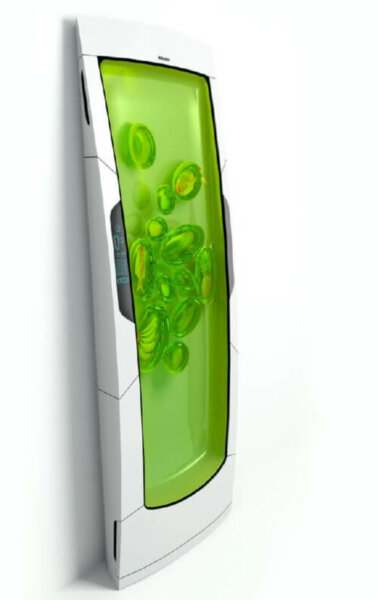
Four times smaller than a conventional refrigerator, the Bio Robot cools biopolymer gel through luminescence. Rather than shelves, the non-sticky, odourless gel morphs around products to create a separate pod that suspends items for easy access. Without doors, draws and a motor, 90% of the appliance is solely given over to its intended purpose.
At the same time, all food, drink and cooled products are readily available, odours are contained, and items are kept individually at their optimal temperature by bio robots. The fridge is adaptable – it can be hung vertically, horizontally, and even on the ceiling. Different sizes and dimensions allow it to perfectly fit the dwelling. Design by Yuriy Dmitriev, Russia.
The Future Today: The Xeros Washing Machine
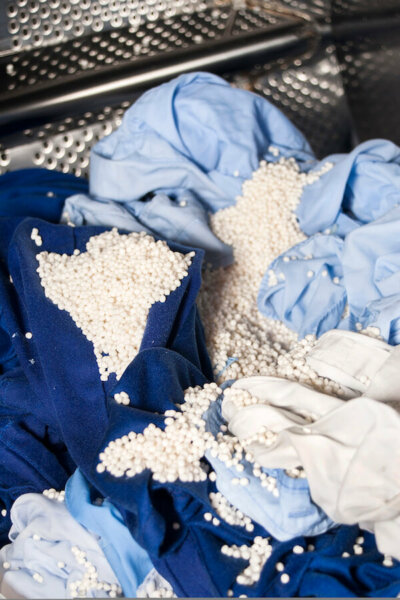
A new washing machine that uses just a cup of water, a pinch of detergent, and about 1,000 small recyclable plastic chips to clean clothes is available now for commercial customers. A Xeros Washing Machine for homes is “coming soon.”




























Leave a Reply